In which I attempt to correct the poor decisions made 50 years ago by the lowest bidding electrician; five years ago by a corner cutting house flipper; and ease the unease of a 9-year-old boy; all with an overly complicated hardware and software solution.
The two light fixtures in the upstairs hall have always been problematic for a few reasons.
First, there aren’t any windows in the hall itself, so even in the middle of the day you need to turn on lights if all the bedroom doors are closed. And second, the two lights are switched separately, and finally, the end light isn’t on a three-way switch. Recently the fixture at the top of the stairs has been malfunctioning* so I needed to get to work.
In the four years we’ve been in this house, I’ve thought about different ways to fix this situation, but my wife has vetoed each of them. The easiest fix would be to change the wiring on the end light to make it a three way switch with the second switch at the top of the stairs.
Also my youngest has declared that he is afraid of the dark, so he needs someone to go upstairs to turn on the lights before he can get ready for bed. I don’t think he’s afraid off the dark, he’s afraid of missing out on fun if he goes to bed before his big sister.
The kids have recently gotten Apple Watches, so they now have access to Siri & HomeKit, so these lights are being converted to Hue lights.
The existing fixtures are the contractor specials with integrated LEDs, so the fixture itself needs to be replaced.
I’m replacing the existing single gang switches with double switches so either light can be controlled independently from any of the three switch locations. The switches will be connected to Hue Switch Modules so I don’t have to run any new wires.
Safety first – shut off the breakers serving the lights in question.
Step one, remove all the light fixtures and switches.
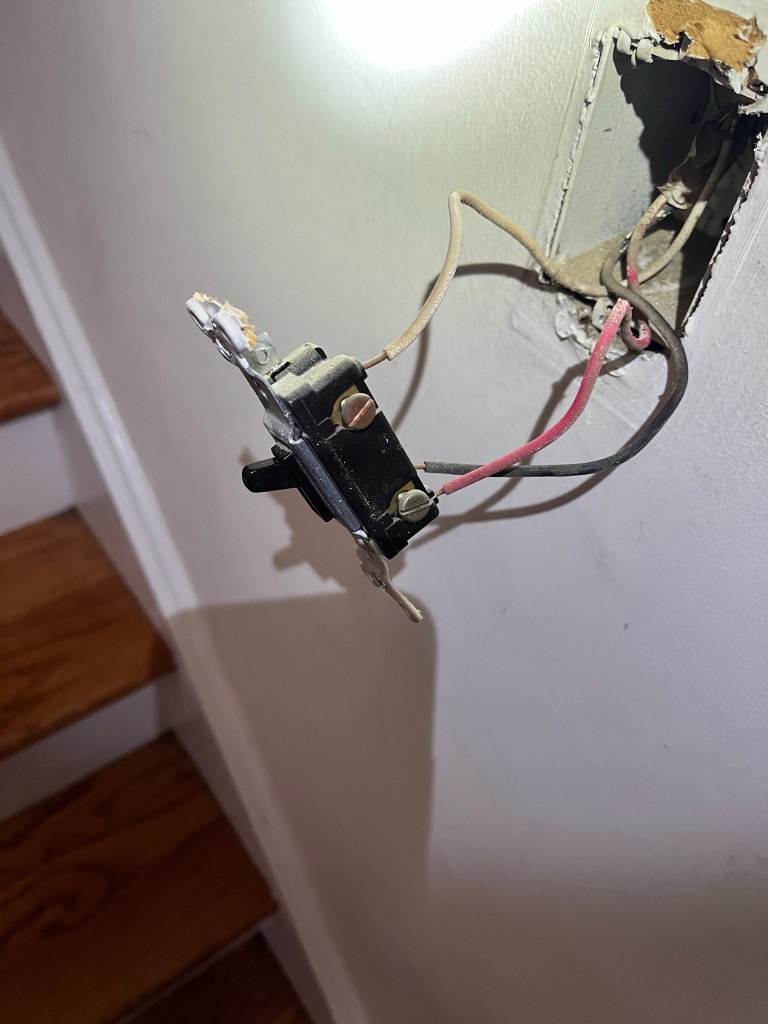
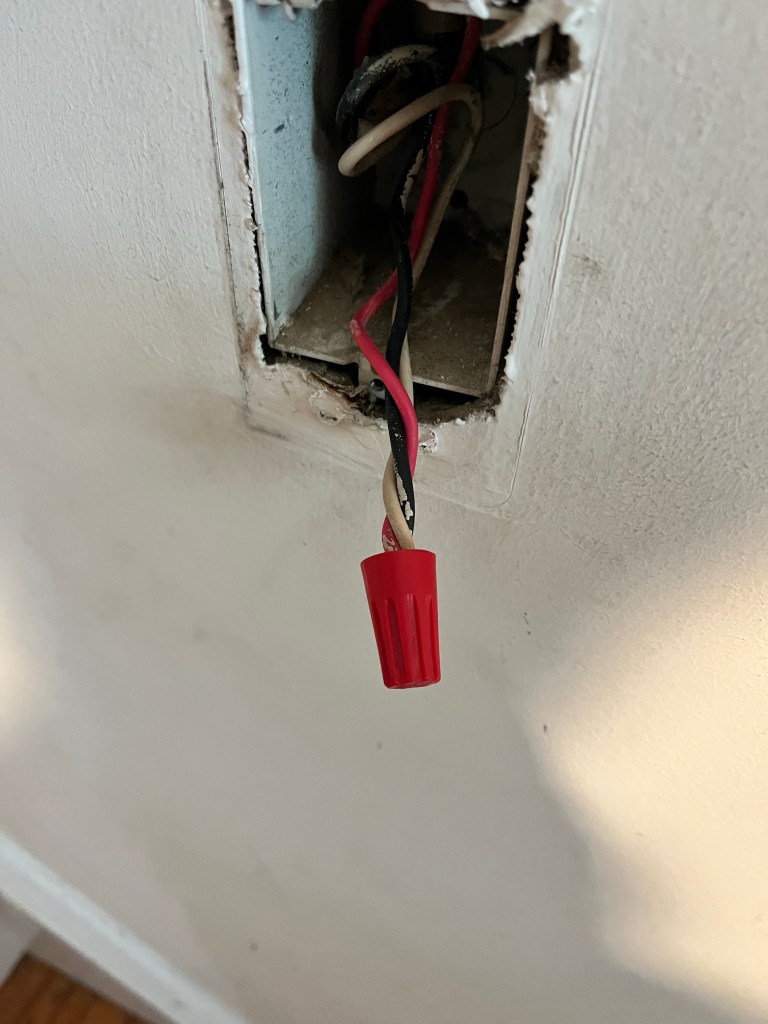
The smart bulbs, like all smart devices need constant power. They can’t listen for commands if the radio doesn’t have power, after all.
The easiest way to ensure constant power is to remove the switch from the circuit. It sounds totally wrong to have a ceiling mounted light fixture with no way to turn it off, but it’s right in this case.
The light fixtures are installed just like any other fixture. Please note that I’m not giving any instructions on this. If you’re comfortable working with electricity, have at it.
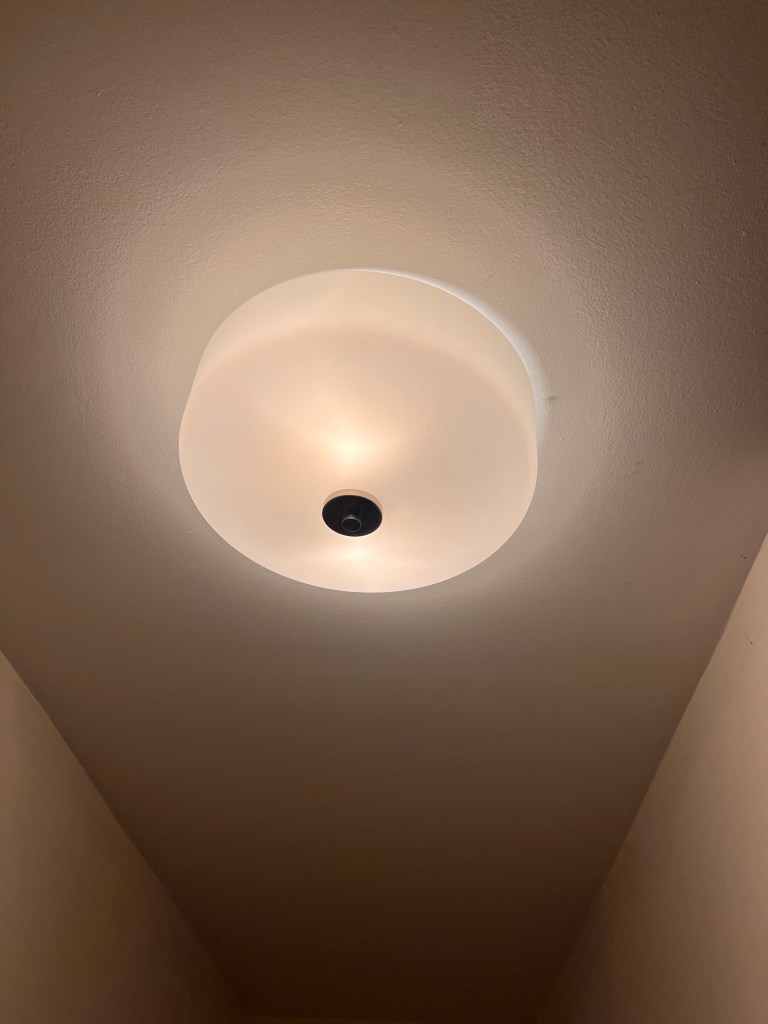
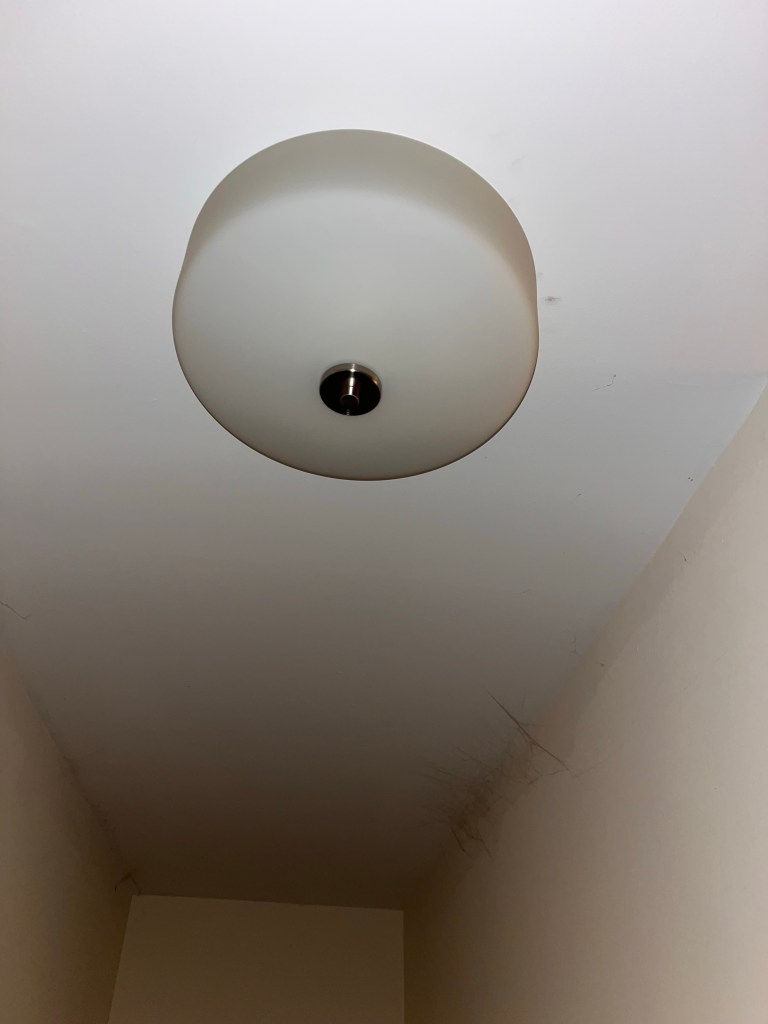
I chose these simple alabaster two bulb fixtures because I like a nice even light and I don’t think this simple hallway can really handle an ornate fixture.
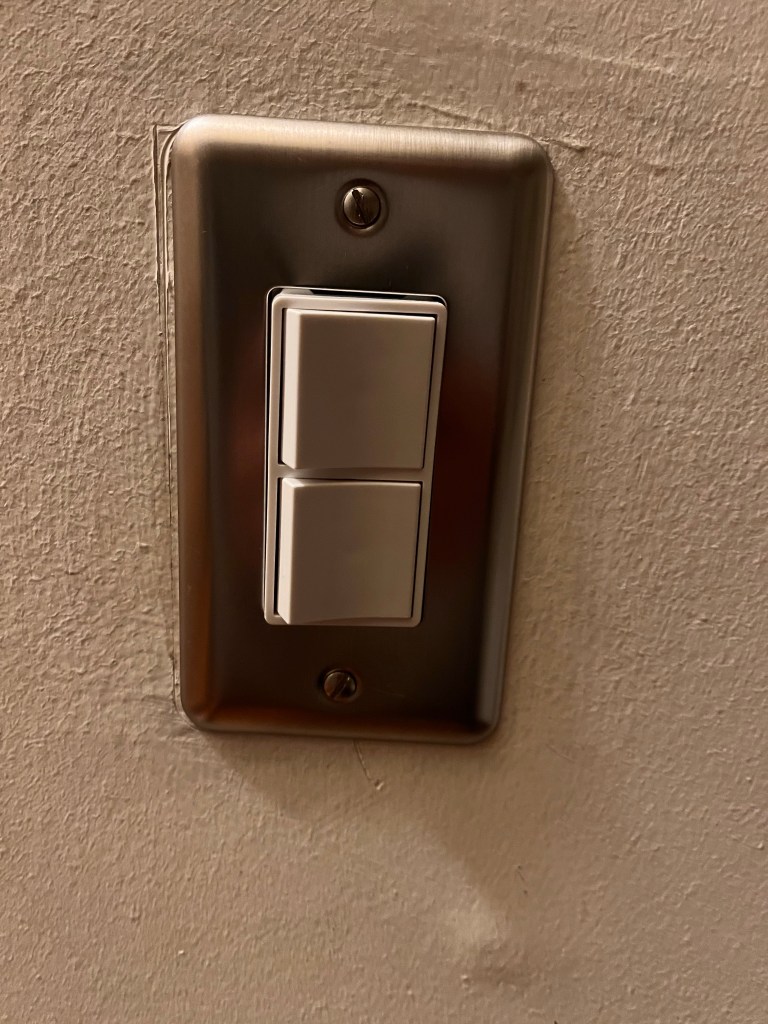
I’m installing three of these “single gang, double Decora switches”. The top switch controls the light at the top of the stairs; the bottom, the bottom of the hallway. Inside the gang box each switch is connected to a Hue Switch Module.
The real fun comes when you start adding seven things to your Hue bridge at one time. (Ed. note – 10 actually, 4 bulbs, 3 modules with two switches each. Each pair of bulbs is controlled by three switches)
Actually don’t do that. Add them one at a time. But before you start adding them, have your naming conventions set up. Re-read the editor’s note above to understand why naming conventions are important.
And pro-tip, add the lights before the switch modules, as Hue doesn’t like modules that don’t control anything.
*The malfunction was caused by the flipper removing all the light fixtures then spraying paint throughout the house. Then neglecting to scrape the paint off the ground wire when installing the new lights. LEDs don’t work well without a good ground.

 Modern Anachronist