
My brain is pretty bad at making a final decision. I’m very good at visualizing alternatives. Brilliant at building pros & cons lists. But choosing something I’m going to have to live with for years – utterly paralyzing to me.
So choosing a paint color when redecorating a room is a special kind of hell for me. Luckily I’ve found a solution. I call it the slow decay decision making process.
When you walk into the home store, all those paint chips are arrayed in a very specific order, displayed under precisely white light. You could make your room any color imaginable.
And at the home store, under that light, all those colors look utterly fabulous.
But you don’t have that light at your house. And honestly, the light in your house changes constantly.
So grab some of those paint chips. Grab a few more. No really, get at least two or three dozen. And a roll of scotch tape.
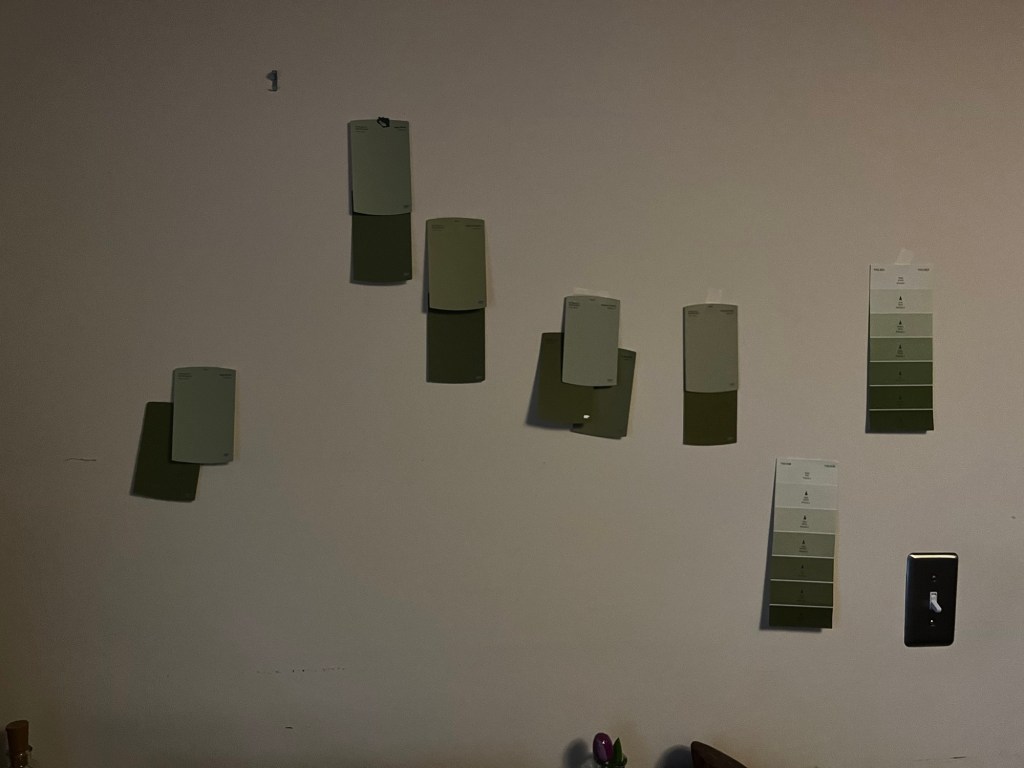
Assuming there are windows in your room, you’re going to have three or four different colors of light every day. The sunlight has different shades between morning and afternoon, especially with east or west facing windows. And the lighting at night isn’t the same color as sunlight. And a day with heavy cloud cover will change the light a lot.
You’re going to paint the room once every several years, so you need to find the color that suits all the different lighting conditions on the room.
Hang all the paint chips on the wall. Not in any particular order. Scotch tape is approved for this application because you’re going to repaint the room next week anyway. I like to use the wall where the change in light is the most dramatic.
Take a look at them in the morning, and remove the ones that you don’t like.
Do it again in the middle of the day.
There are some more that look just wrong at sunset. Pull them down.
After dinner, after dark, turn on all the lights on the room. Which chips look sickly? Now turn off some of the lights and look again.
Thursday is going to rain all day – any of these paint chips look terrible on a cloudy day?
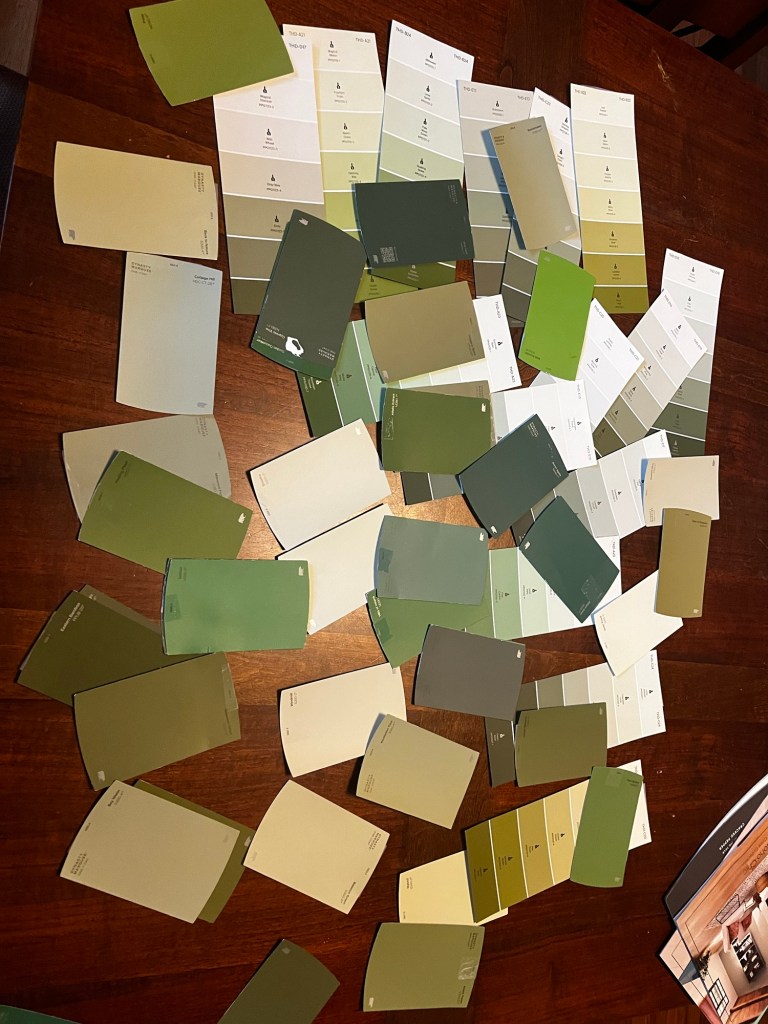
The really bad colors will be quite obvious very quickly. Leaving you with many fewer options to choose from.
Sometimes, you’ll find a color that is just magical in your room. Back in the late twentieth century my then girlfriend bought new construction. Every wall was painted stark white. The dining room had a west facing sliding glass door so there was A LOT of sunlight in the evening. We managed to find a pinkish gray color that utterly danced in the sunset. On a stormy day, that dining room felt alive.
But anyway, once you’ve weeded out the awful colors, it’s time to start the hard bit.
If you’re planning an accent color now is the time to pair the colors up. You may find that they don’t always look good together.
Also, don’t forget to get any other stakeholders involved in this process. It would be a serious mistake to paint the dining room a color your significant other hates. At this point in the process, my wife has told me “green”. (I woke up on Sunday morning to find she had removed my favorite color from the wall, so maybe don’t let your partner have a vote.)
You’ve spent a few days removing the terrible colors. The survivors should range from good to great.
And here’s where the slow decay decision process starts to shine. There are no bad choices. I’ll say it again—
No Bad Choices.
There’s five or six colors on the wall. All pretty good. Maybe you can look for another week and cut out a few more, but you don’t have to.
No bad choices.
Nothing to regret.
So yes, this process adds another week or so to the project. But it also adds a lot of long term satisfaction.

 Modern Anachronist