
Didn’t do much that was really noteworthy today, just took some mineral spirits and a brass bristle brush to the type bars.
I did learn that the bars are numbered, if you ever need to replace them
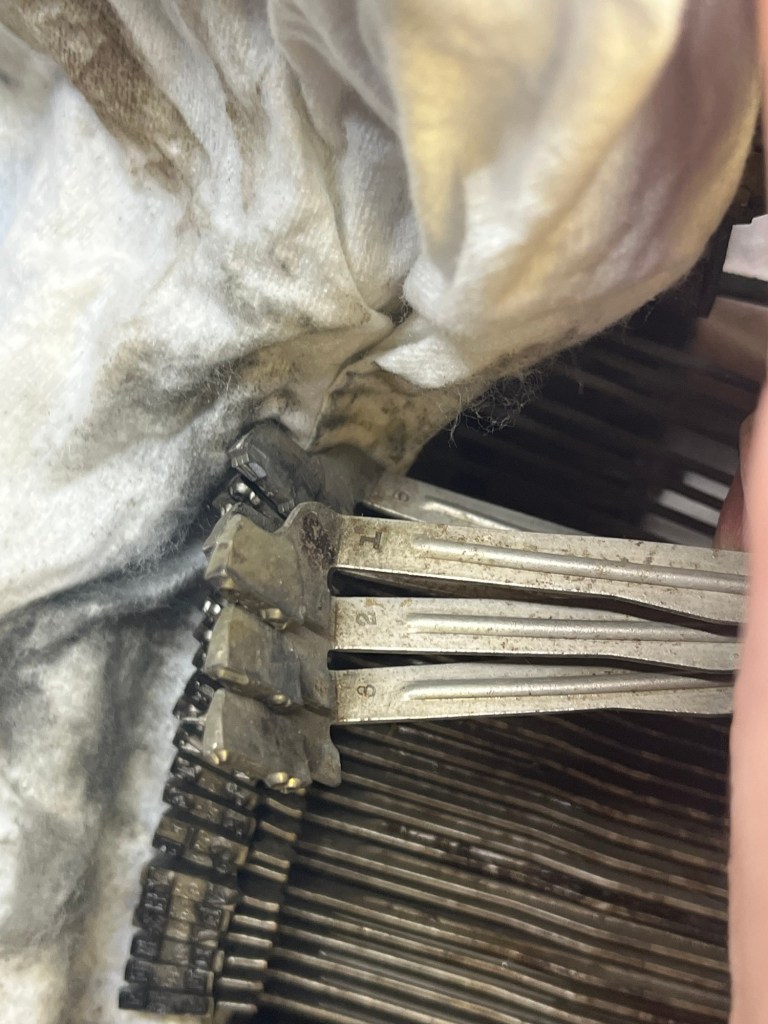
Bear in mind that this thing was made in 1929. At that time, smoking was allowed everywhere. So I’ve got to cut through the layers of filth that include years of dried ink, cigarette smoke, dust, rust, and mouse waste (from my garage).
Initially I started cleaning with rubbing alcohol and an old toothbrush. This was a good start and took the grossest dirt off. But I needed something stronger.
Then I went to denatured alcohol. It did a better job.
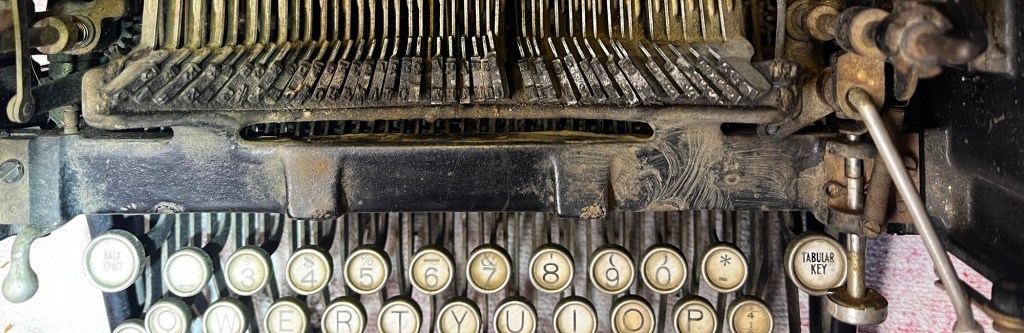
Mineral spirits did the trick. On the unpainted parts, I’m using a brass bristle brush. On the painted bits, I’m sticking to the toothbrush.
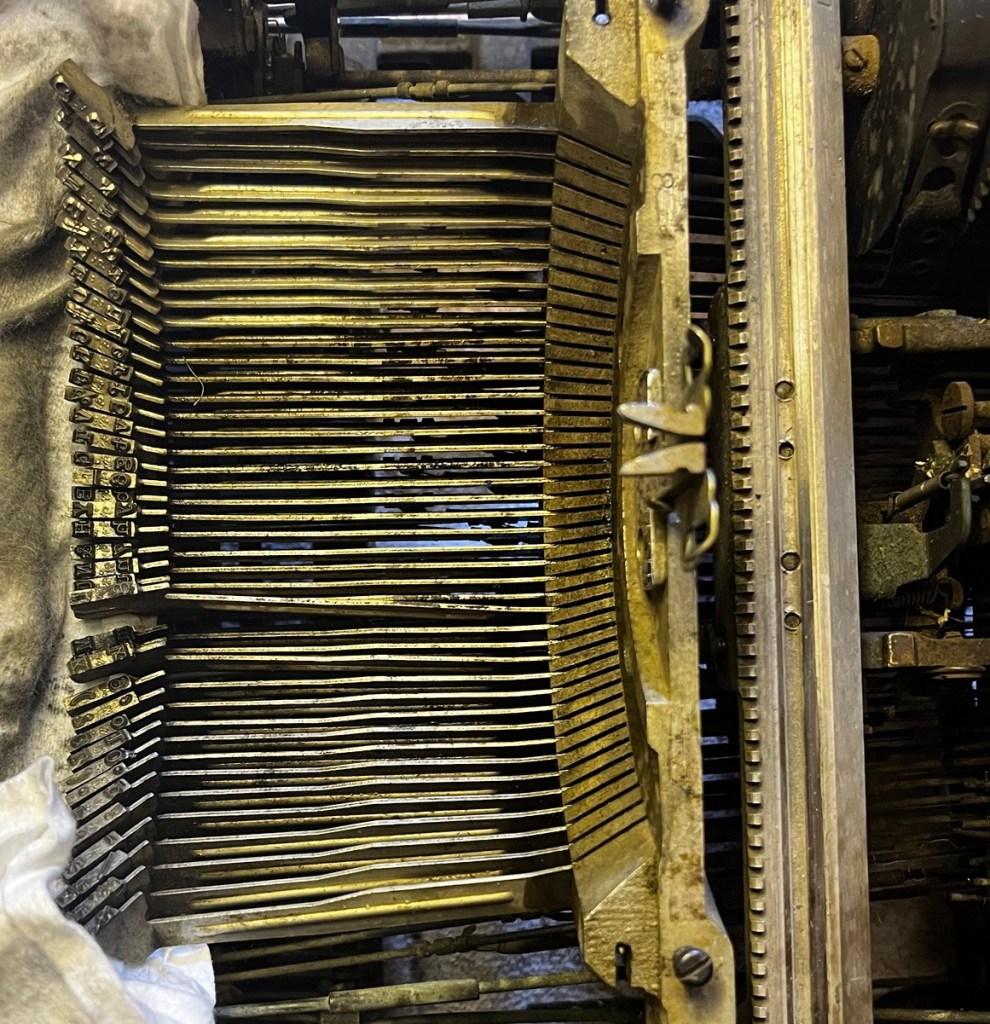
I’m also scrubbing the type bars, but gently so I don’t bend them.
As I was cleaning today, I found THREE more cover panels to remove.
One is a finger panel that goes between the keys. Three screws hidden between the number keys and the front of the type bar gallery.
The second is a bottom panel under the type bar gallery. I originally thought there were springs anchored to this panel so I didn’t remove it earlier.
The third is a dust cover that protects the pivot points of the keys. This is the first time I’ve used a wrench on the typewriter, all the other fasteners have been screws.
{Straight blade screwdriver only. The Phillips screw was patented in 1932, three years after this machine was built.}
Now I think I’ve removed all the panels that aren’t used as anchor points for the mechanical parts. Of course I thought that yesterday, so… maybe?
I’m not sure if I want to do more disassembly, for fear of breaking or losing parts. I’m going to continue cleaning and see where things stand.

 Modern Anachronist