There’s tons of old tools sitting in people’s basements & garages. Tools that granddad or dad used to use, but that the current generation doesn’t have time or space for. Once people learn that you enjoy restoring and using old tools, they start being offered to you, as most people would rather see their tools being used than collecting dust & turning to rust.
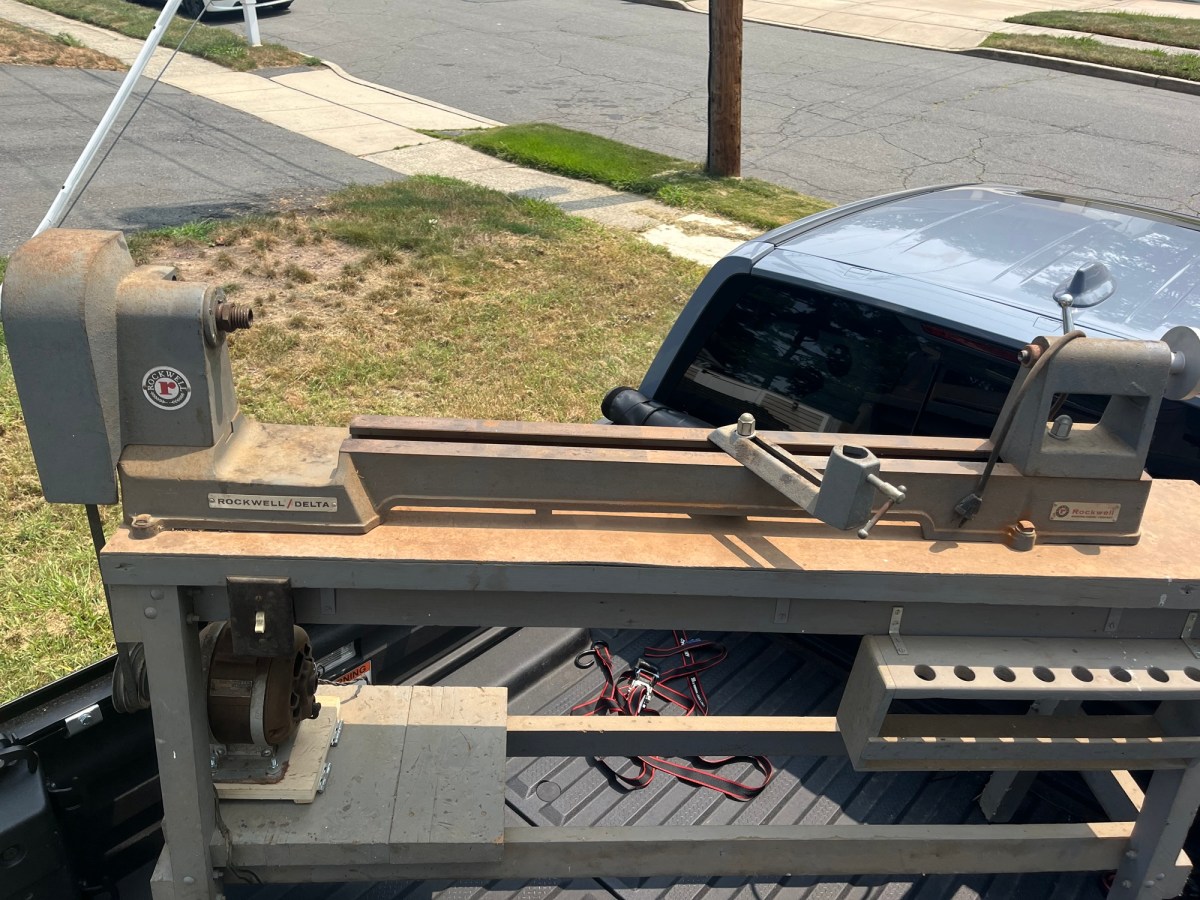
A buddy of mine is retiring and moving into a condo. Last week at a party he asked me if I wanted his grandfather’s lathe.
Honestly, I’ve always thought that lathes were cool, but never considered buying one. But free, Hell Yes!
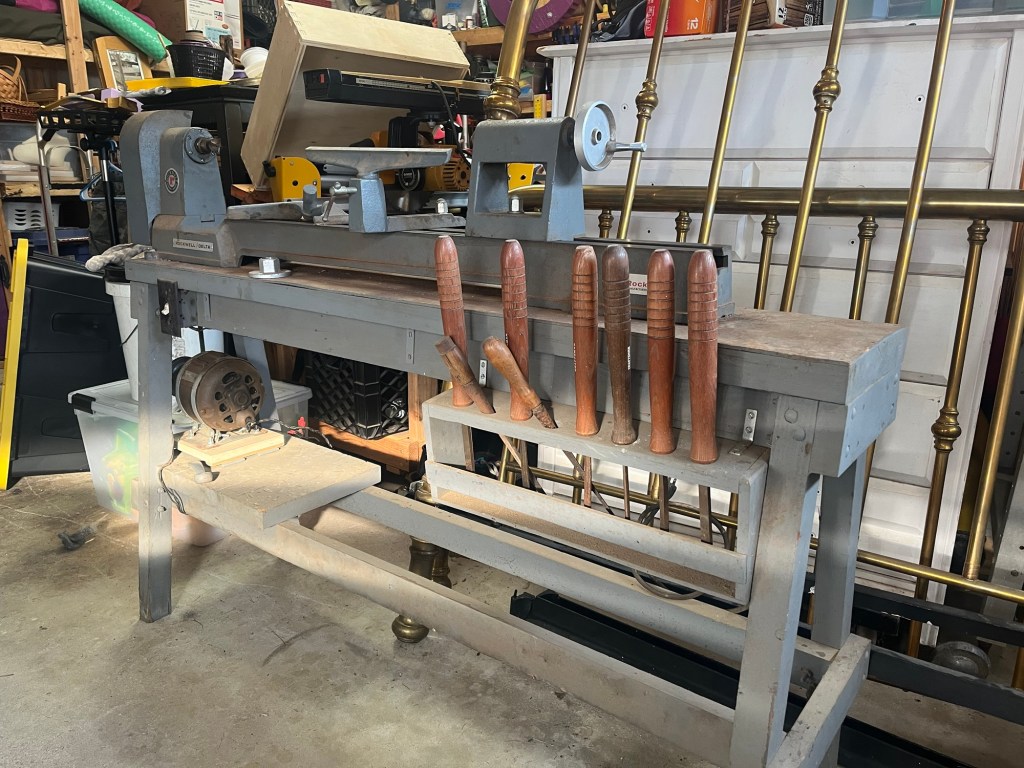
I thought it would be my third Craftsman tool, but I was surprised to see that it’s a Delta (Model 46-111). According to the serial number look up table at Vintage Machinery it was built in Tupelo Missouri in 1966.
Dimensions / specs
The lathe has a 14”/11” “swing”, which means the maximum diameter workpiece is 11”, except for the 4” spot right at the headstock where the bed has been lowered to allow a 14” workpiece.
The bed is long enough to allow 36” between headstock and tail stock.
Delta recommends a 1/3 or 1/2 hp motor. My unit has a 1/4hp motor, so I probably want to get a new motor (more on that later).
My pulley set has four steps, so there are four speeds I can swing the workpiece. The outboard end of the pulley shaft is threaded. My buddy says that I can hang a faceplate on the outside and make any size bowl I want. I’m sort of wary to try this as there is no way to support the tail of the workpiece.
Turns out, my buddy was mistaken, the faceplate I have has right hand threads, so it mounts to the inboard side of the headstock.
Parts included and what’s missing
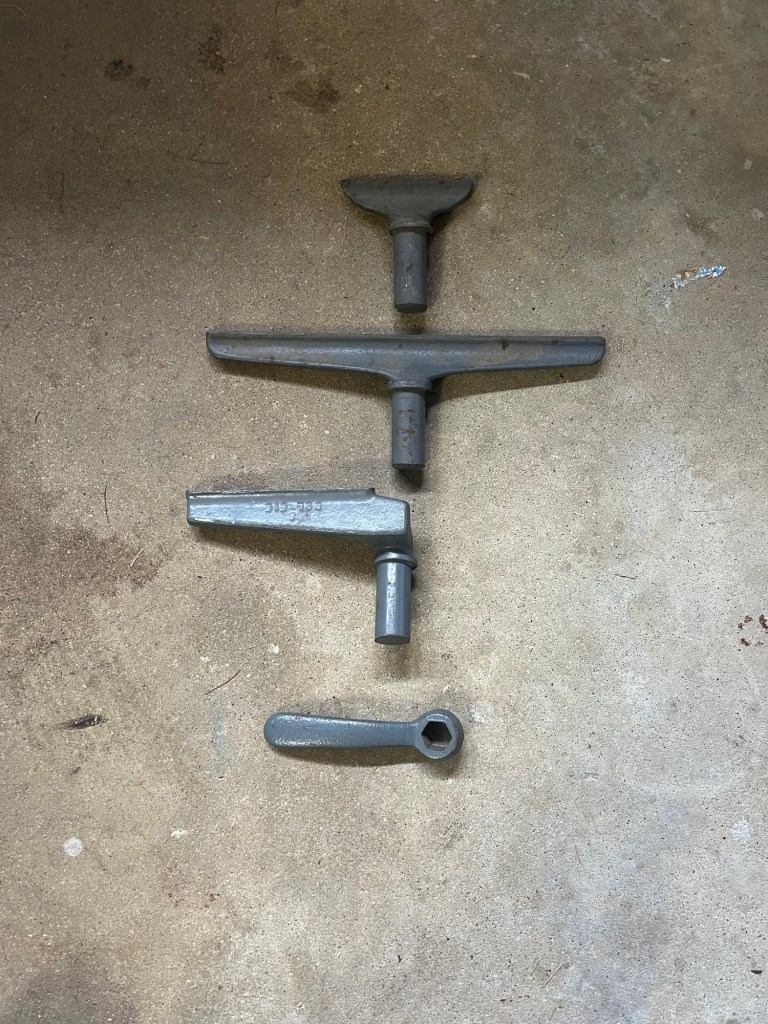
I’ve got all three tool rests and the 3/4” wrench to set the tool rest & tail stock. I don’t have the 1 1/4” wrench to remove the pulley set or either of the Allen keys that were supposed to come with it. I’m also missing the indexing pin which is used to lock the work piece in place.
Getting this lathe up and running is going to be a multi step process. The most critical step will be rewiring the lathe.
The toggle switch that my buddy installed is at least in a sensible location, but I’ll replace that with the paddle switch I’ve used on the previous two tools.

In addition to the underpowered motor, and interesting power switch, I’ve got about 100 feet of extra wire between the switch and the motor
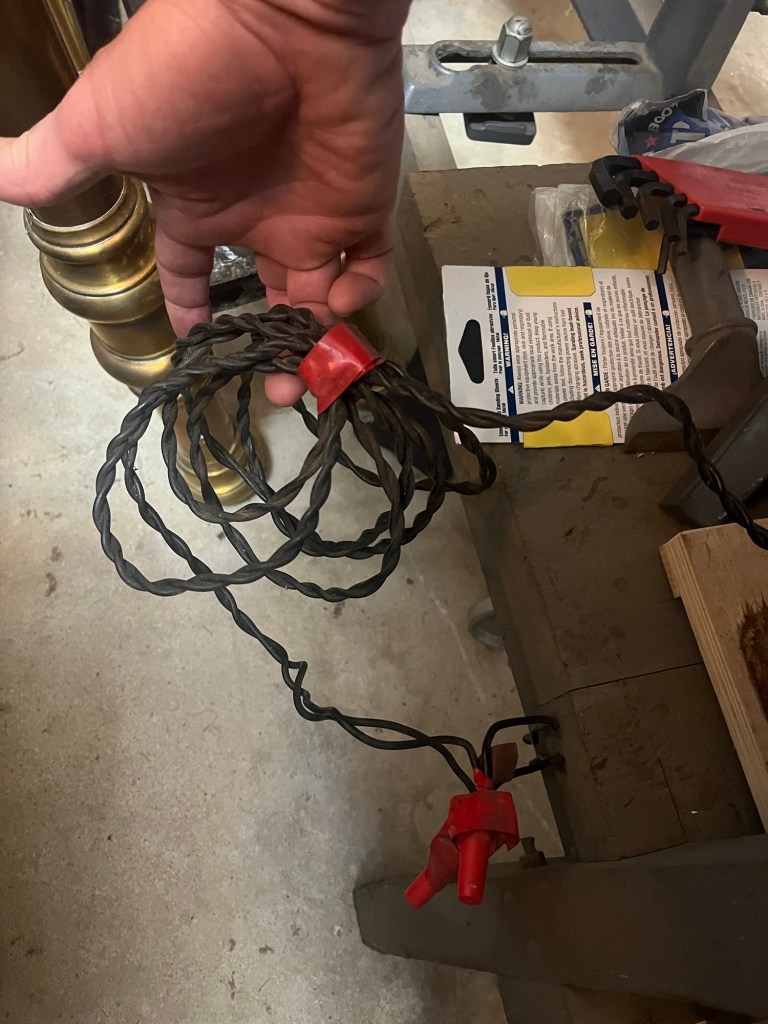
And the wire nuts just floating free are sure to boil the blood of any safety or electrical professionals who see it.
Of course, like all my tools, I’ll need to move it to use it, so another set of flip up casters will be installed.
I’ll keep the lathe on this table for the time being. Although a 48” wide cabinet would provide a lot of storage space, I don’t think that a lathe lends itself to being mounted atop a cabinet. This table gives me space for my legs if I’m sitting on a stool, where a cabinet would force me into an awkward position.
I will however modify this table so that all the lathe accessories / tools have designated places. The existing chisel rack will be used as inspiration for an updated one.
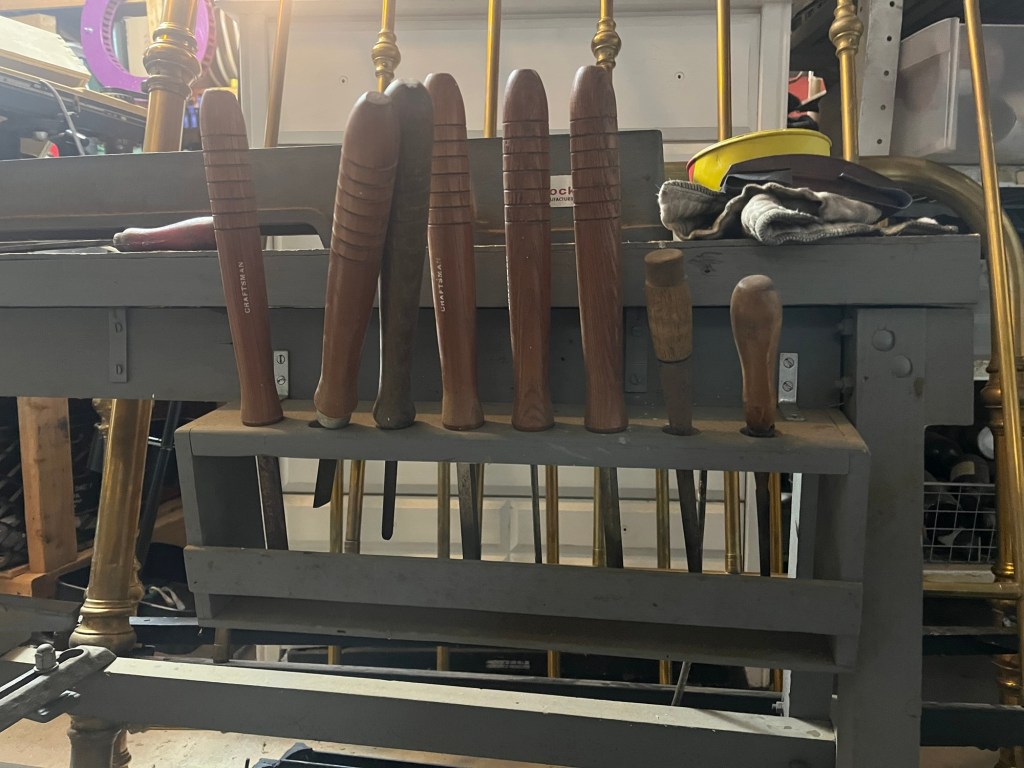
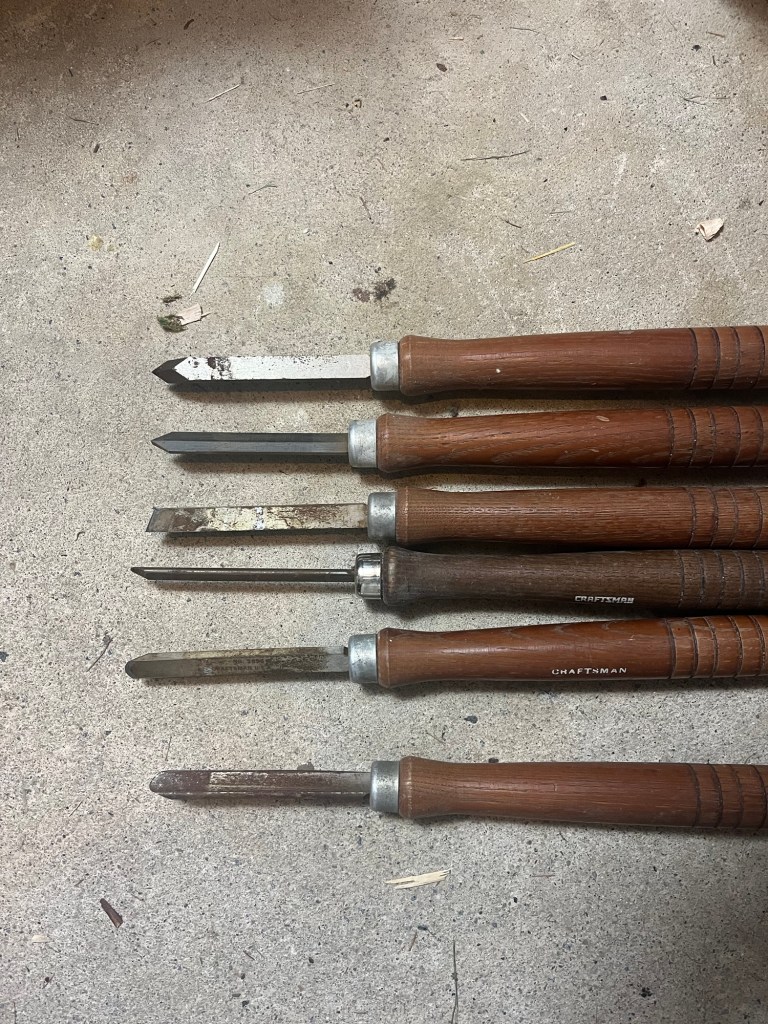
The chisel set needs to be either sharpened or replaced. Most likely, I’ll sharpen these and use them a few times and then replace them with a new set.
There is some minor rust on the bed, so I’ll be hitting that with Emory cloth to remove the rust and paste wax to keep the oxygen away from the iron.

 Modern Anachronist