I like the 8 strand herringbone braid because it’s unique in appearance, easy to produce, and easy to customize.
First off, it has a square cross section. Most things made from cordage are either flat like the Solomon Bar (cobra stitch) or round like the snake knot.
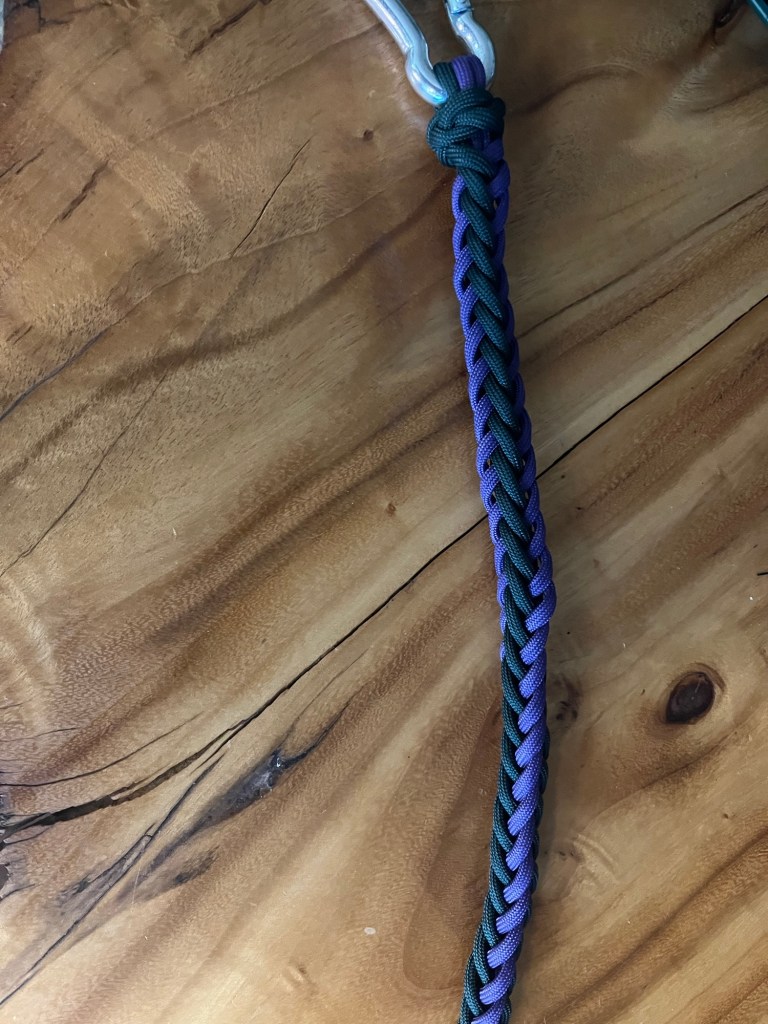
Secondly, because you are working with 8 strands, there are a lot of ways to play with your colors.
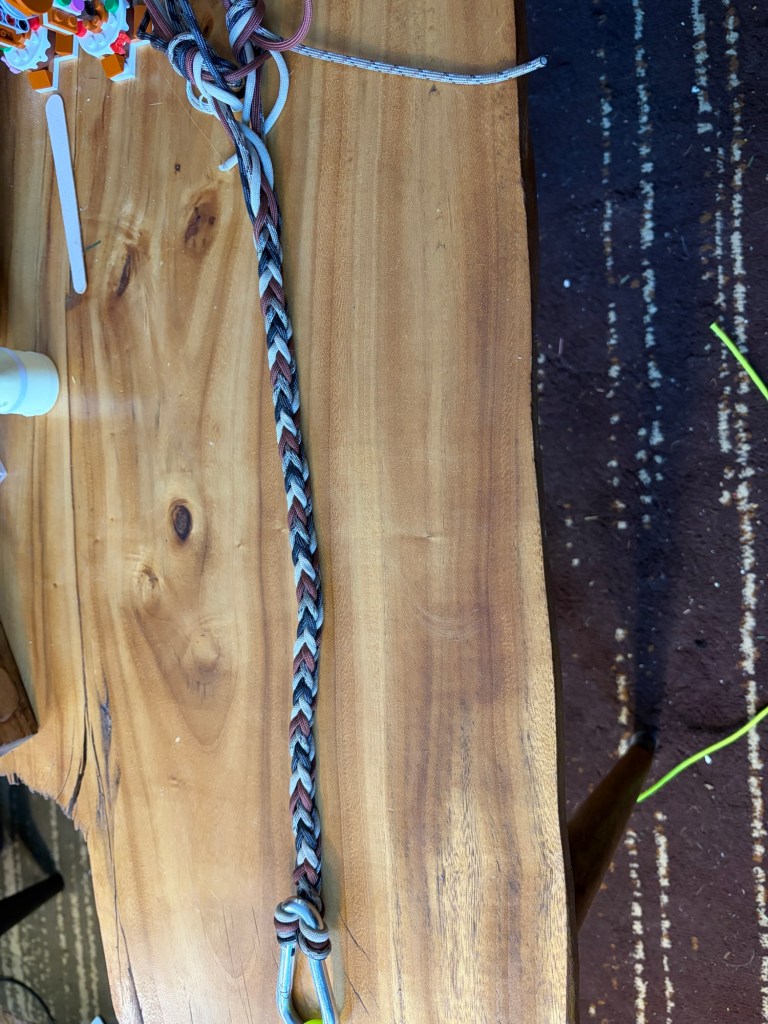
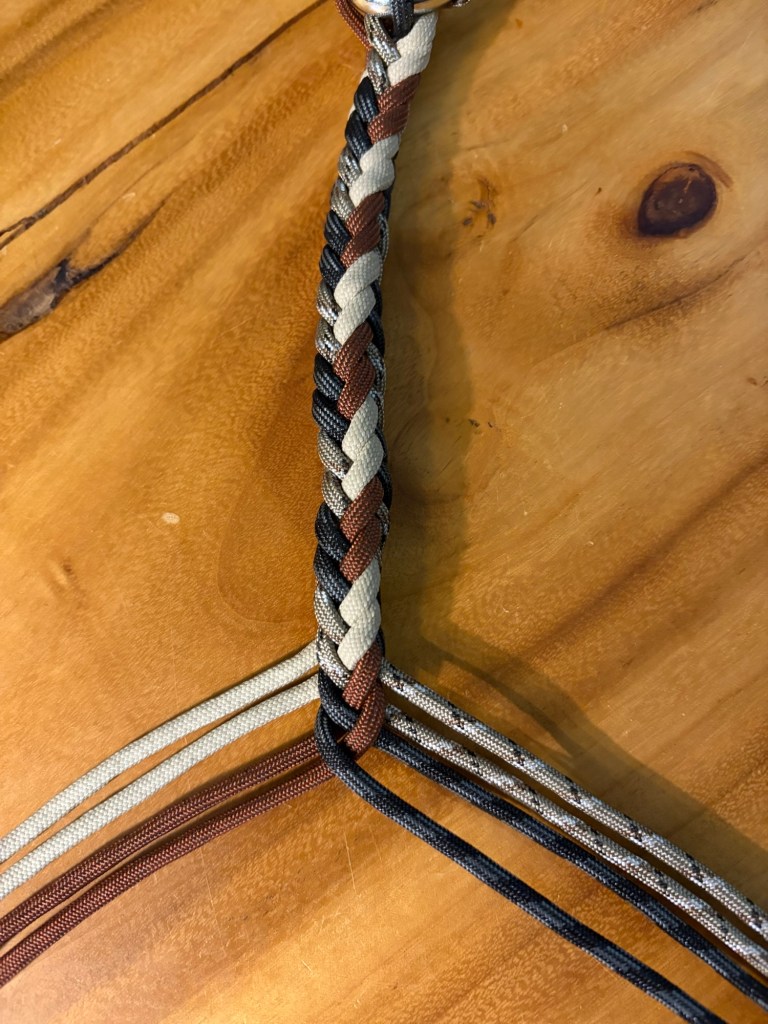
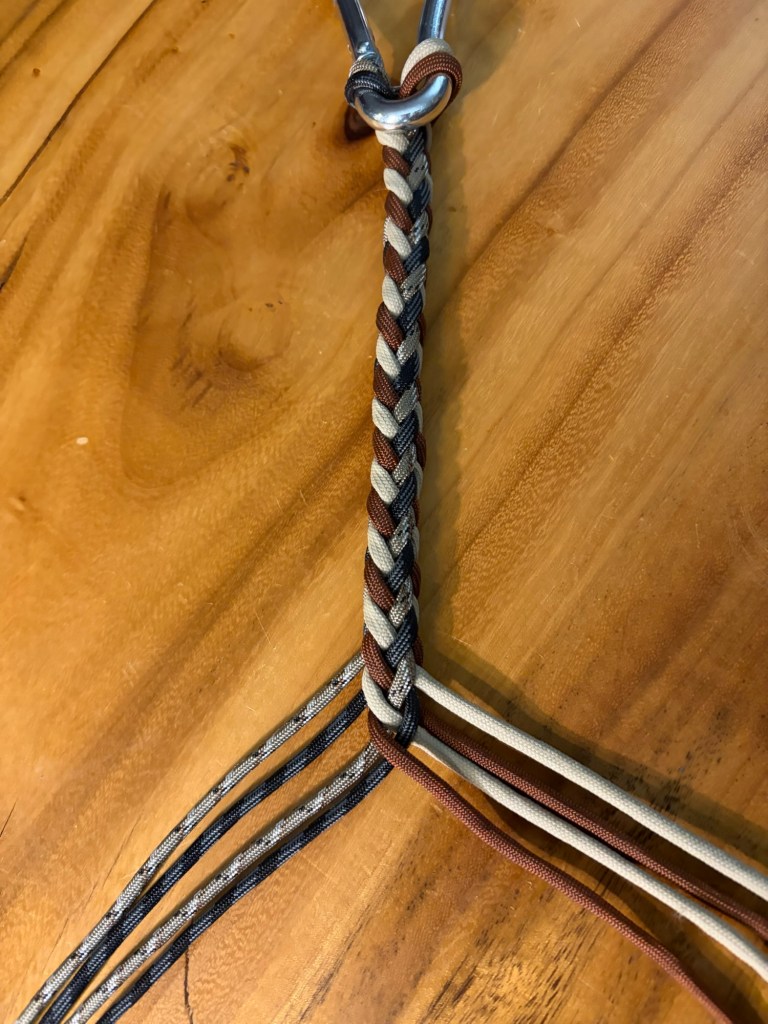
Personally, I feel like four colors is probably too busy. It’s also possible that this is only because I’m experimenting with the free color samples I get with my cordage orders. Maybe four well chosen colors would look great.
In the past I’ve used two colors and four strands of each. There’s only three possible combinations here; left-right, single or double stripes.
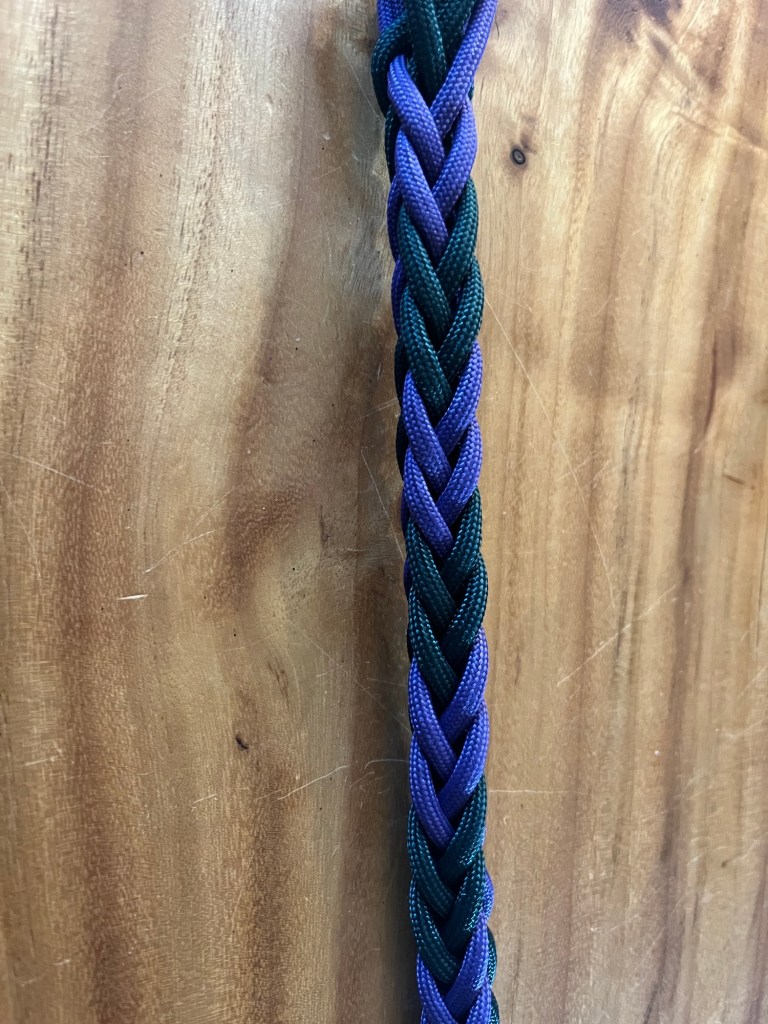
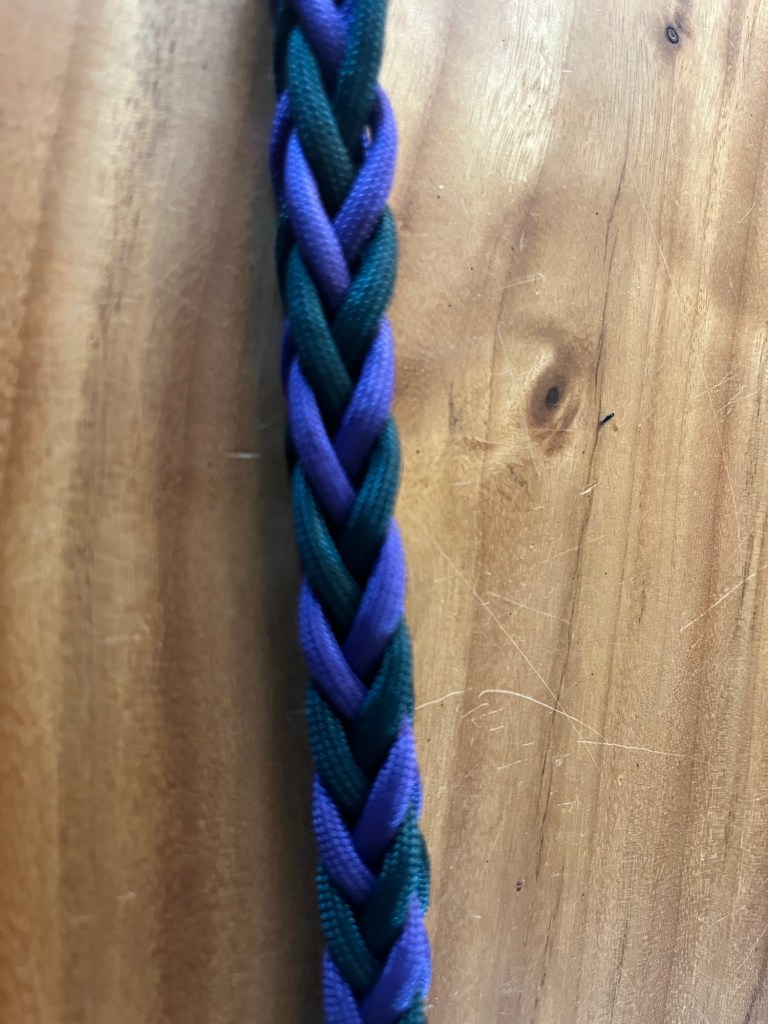
If you want to play with an accent color, you open up a lot more possibilities.
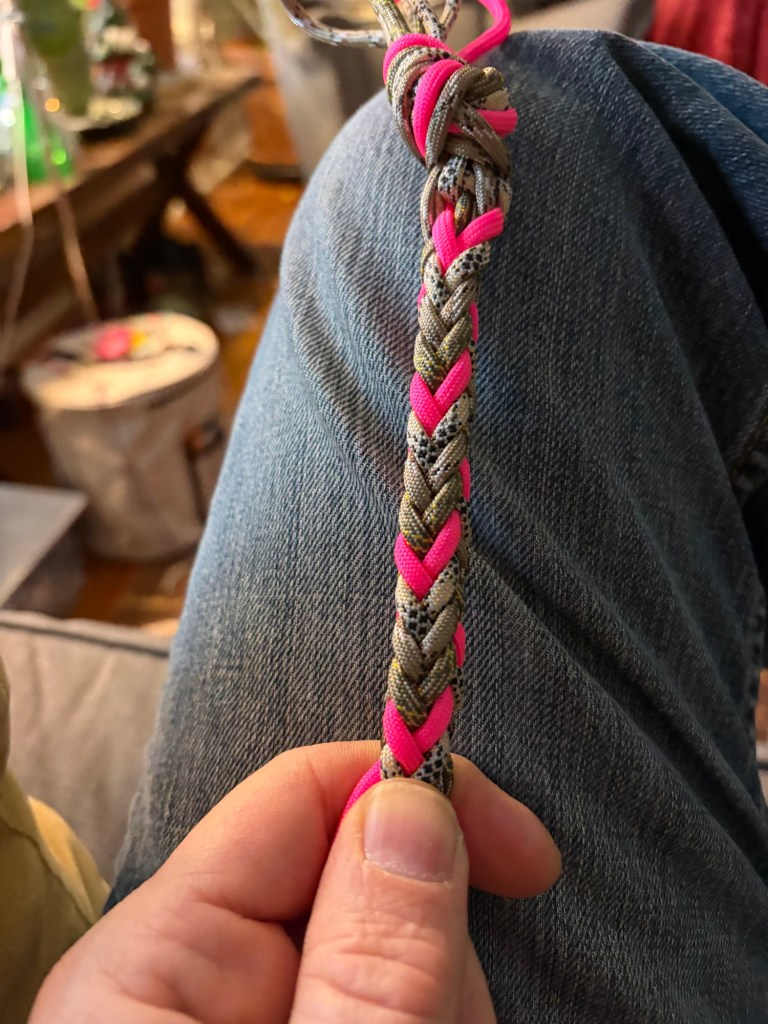
Brown in positions 3-8
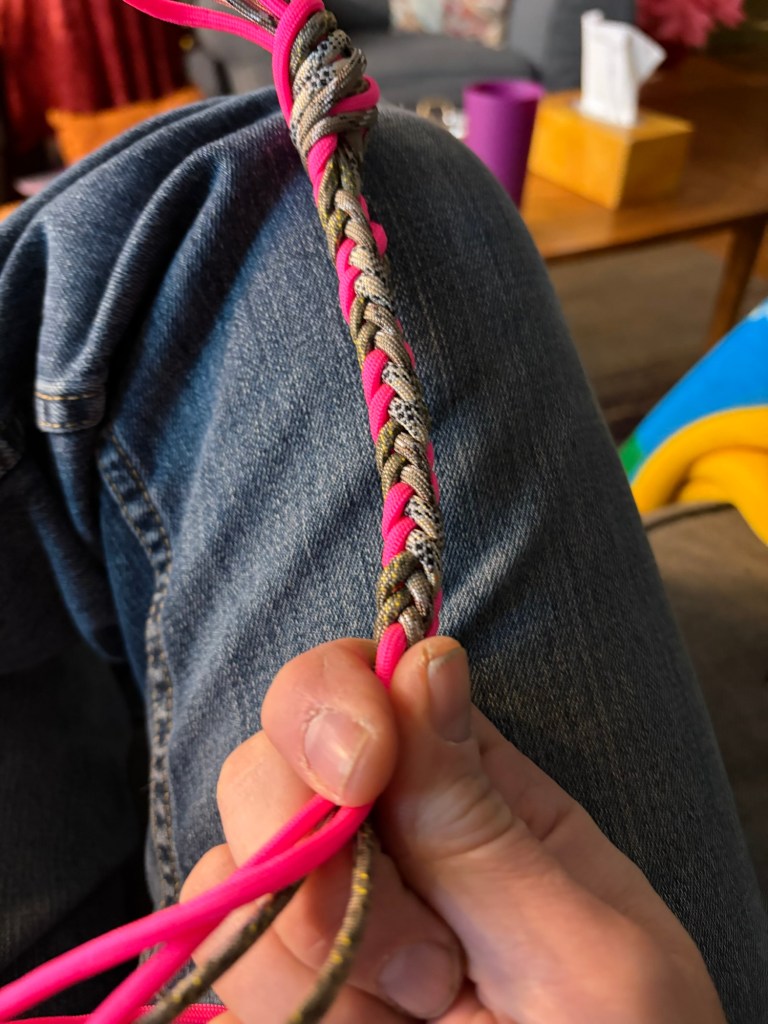
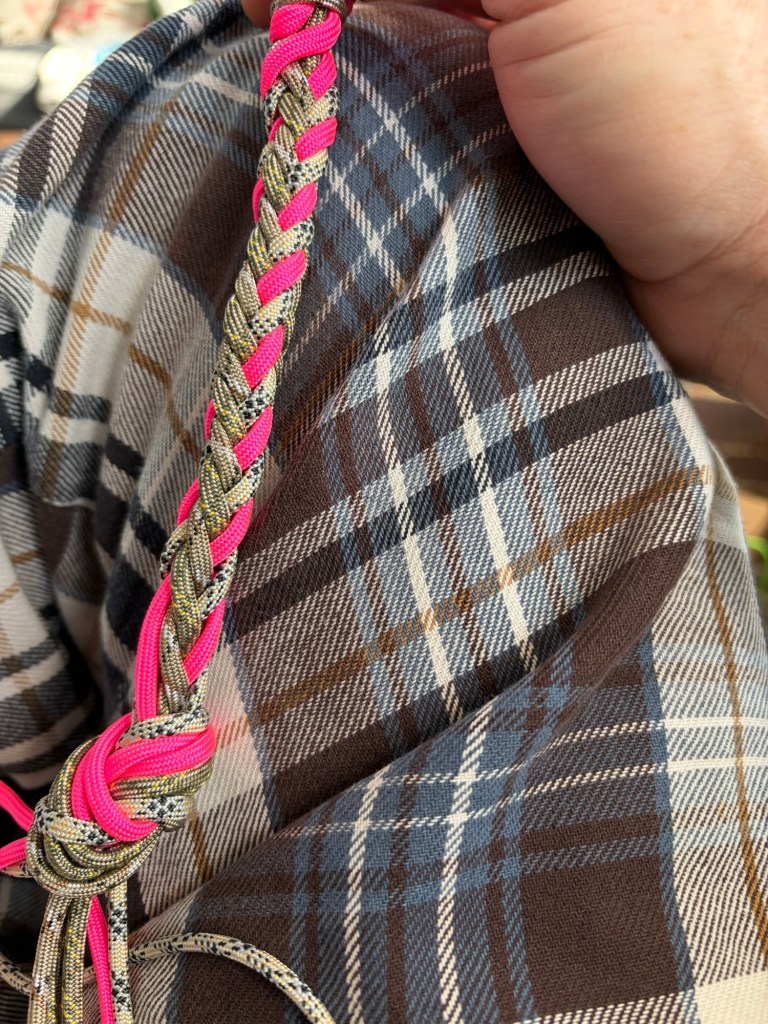
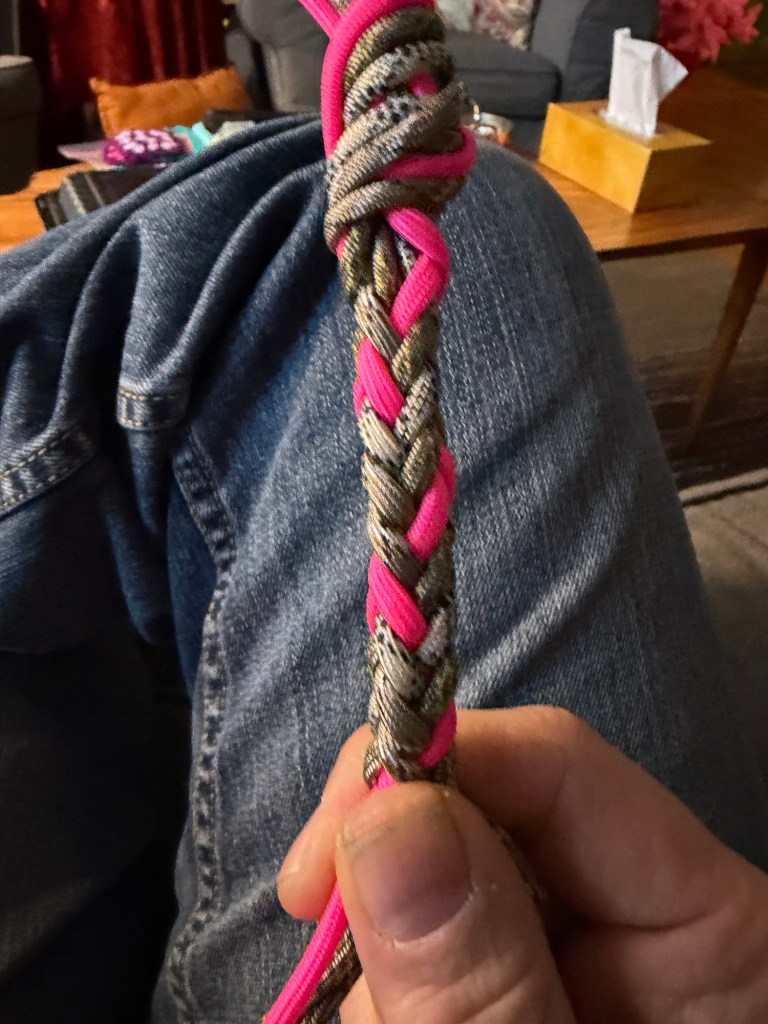
Now that you’ve seen some of the ways you can play with this braid, let’s talk about how easy it is to do.
Although you’re working with 8 strands, I usually use 4 cords folded in half. Since I commonly use this braid to make a leash, the cords are folded around the clip hardware of the leash.
Four cords, each 48 inches long, will yield a finished 8-strand braid 15 inches long.
Take four working ends in each hand and arrange them into the pattern you use want.
Step 1 Pass the outermost left hand cord behind all the left hand cords and the two inner right hand cords. Bring it forward over the two inner right hand cords and place it so it’s the innermost left hand cord.
Step 2 Pass the outermost right hand cord behind all the right hand cords and the two inner left cords. Bring it forward and over the two inner left cords and place it so it’s the innermost right hand cord.
Said another way, cord 1 goes behind 3,5,7,8,6. Comes forward between 6 & 4, then goes to the left in front of 6 & 8 and becomes the new number 7. Then cord 2 passes behind 4,6,8,7,5; comes forward between 5 & 3; goes to the right in front of 5 & 7 and becomes the new number 8.
The left cords will always stay in the left hand. The right cords will always stay in the right hand.
Repeat steps one and two until your project is the desired length.
I like to adjust the tension every time I’ve tied the full set of eight strands – just pull on each of them one at a time. If your tension is even, your project won’t twist.
If you need to put your project down before it’s done, I tie each side into a separate slip knot.
Starting and ending – style points –
Starting the herringbone is as simple or fancy as you want to make it. You can just fold the cords over your hardware and they will naturally split into right and left hand sets.
Alternately, you can tie a knot. In my opinion, the diamond or knife lanyard knot is a good looking way to start things, but it’s a bit of a hassle to tighten up evenly against the hardware.
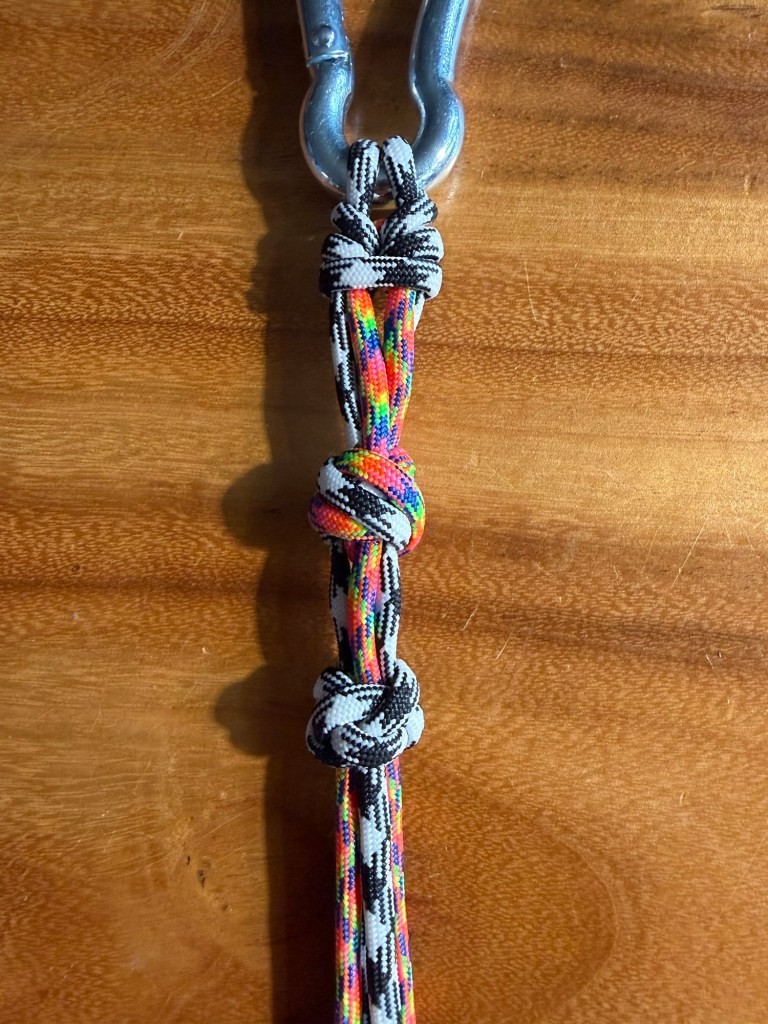
The larks head or Cows Hitch is simple, but not very appealing to me when working with this many cords.
The Matthew Walker Knot can be tied in any number of strands and gives a great spiral look. It’s a tough knot to tie, so be prepared to practice it a few times before you’re happy with the results.
If you’re working with 6 strands of one color and two of an accent color, a 6-strand MW can conceal the accent color.
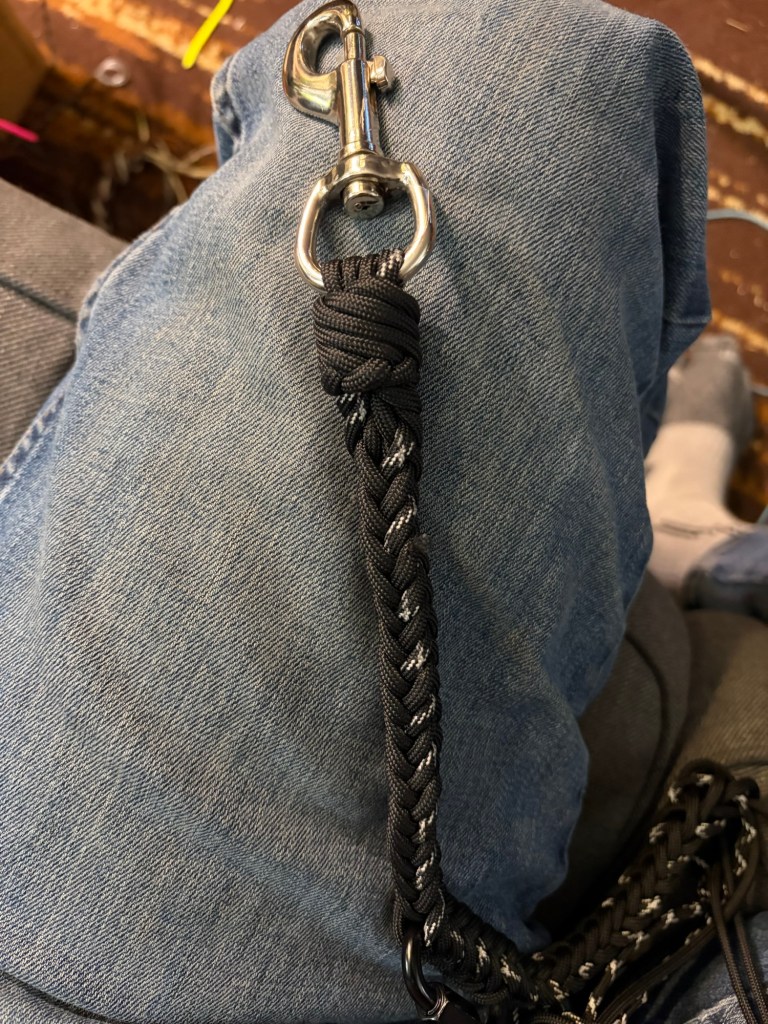
The Matthew Walker is also excellent for terminating the 8 strand herringbone and transitioning to another stitch, as it makes a barrel around the cords, hiding the end of the braid and all the ends exit the knot in a tight bundle.
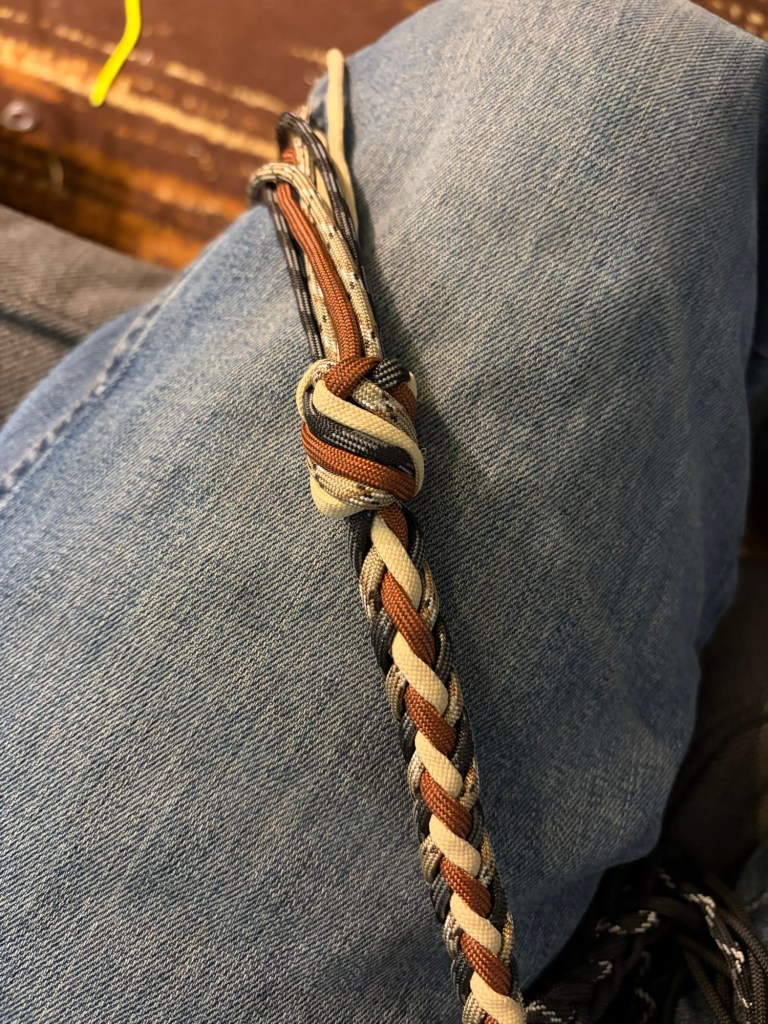
As you can see in some of the above images, when you’re working this braid the incomplete section is pretty big. Add in the fact that the cords are heading away from the project and the transition can get quite difficult to make attractive.
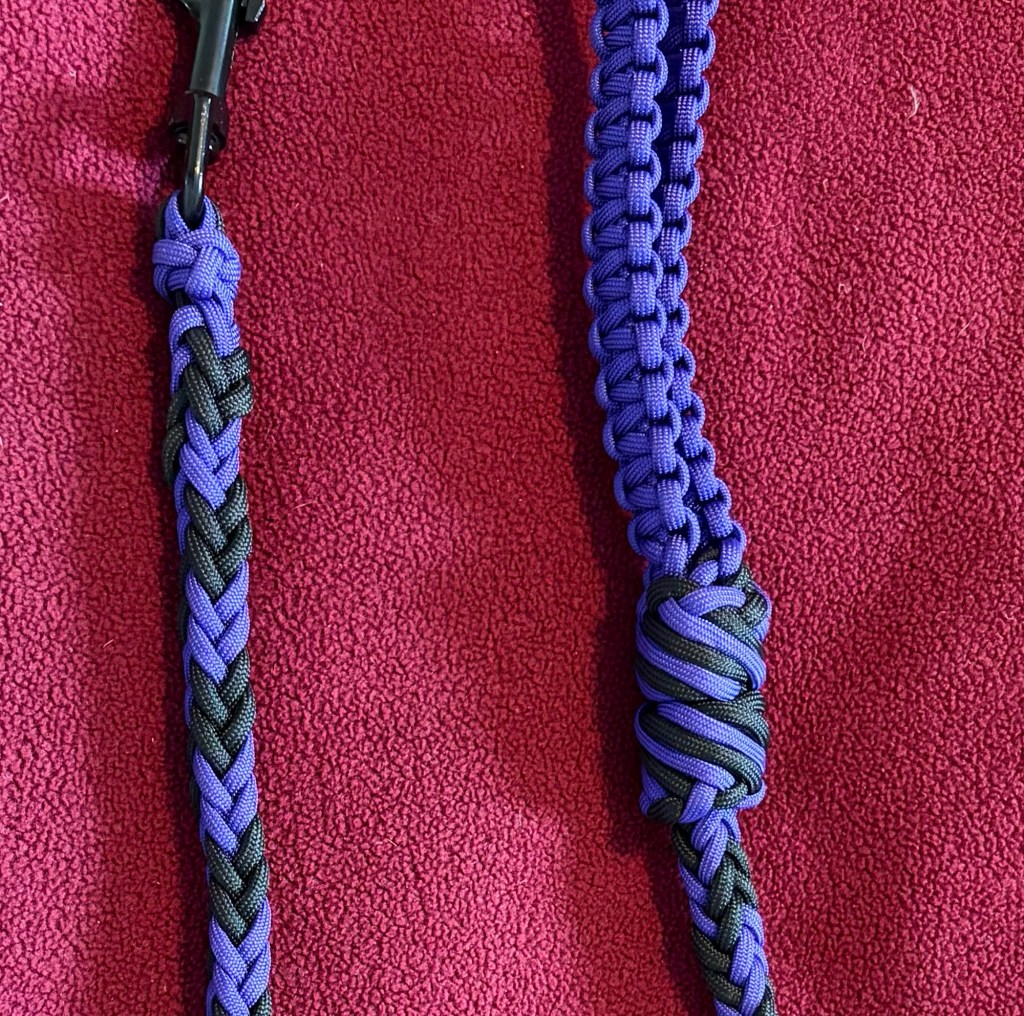
For the purple and black leash pictured above I started with a diamond knot tied in one cord. The other cords were just passed through the center of the diamond knot to hold them together.
The eight strand herringbone bone was tied in a double thick stripe pattern.
When the body was long enough I tied a Matthew Walker (alternating black and purple) knot for my transition. This knot was left just a little loose.
I then tied the four purple cords in a standard Solomon bar to make a handle loop. When the bar was long enough, I fed all eight strands back down through the transition knot with a Swedish fid. The volume of eight added cords made the transition knot much tighter.
When all eight strands were positioned correctly, again alternating black & purple, I tied a second Matthew Walker knot. This knot was tightened fully, the ends trimmed close and melted.

 Modern Anachronist