In which your author begins to explore yet another rabbit hole to improve his Norse kit.
When I bought my tunic added some trim to the collar and cuffs that really improved the look, but that trim was pricey.
In which your author begins to explore yet another rabbit hole to improve his Norse kit.
When I bought my tunic added some trim to the collar and cuffs that really improved the look, but that trim was pricey.
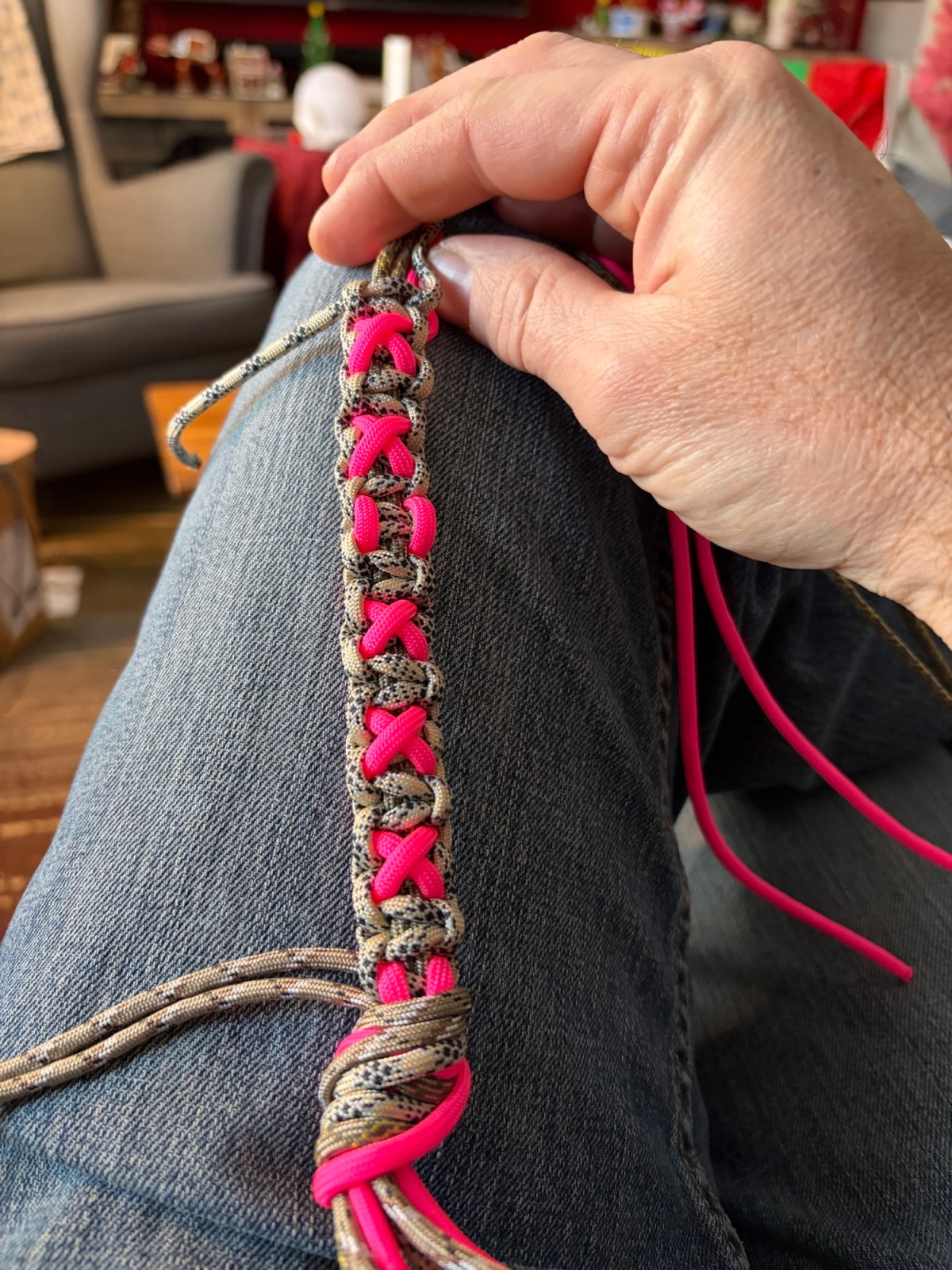
A friend has asked me to make a leash. Her color & design choices are a bit boring in my opinion , so I’m trying to find a way to jazz it up without going contrary to her desires.
She asked for a handle without a wrist loop, so I’m going back to basics, but as usual I’m going to get a little funky with it.
Every kid who has ever gone to a summer camp knows this knot. Tied with annoyingly slippery plastic lace to make a key fob, it’s sometimes called a gymp.
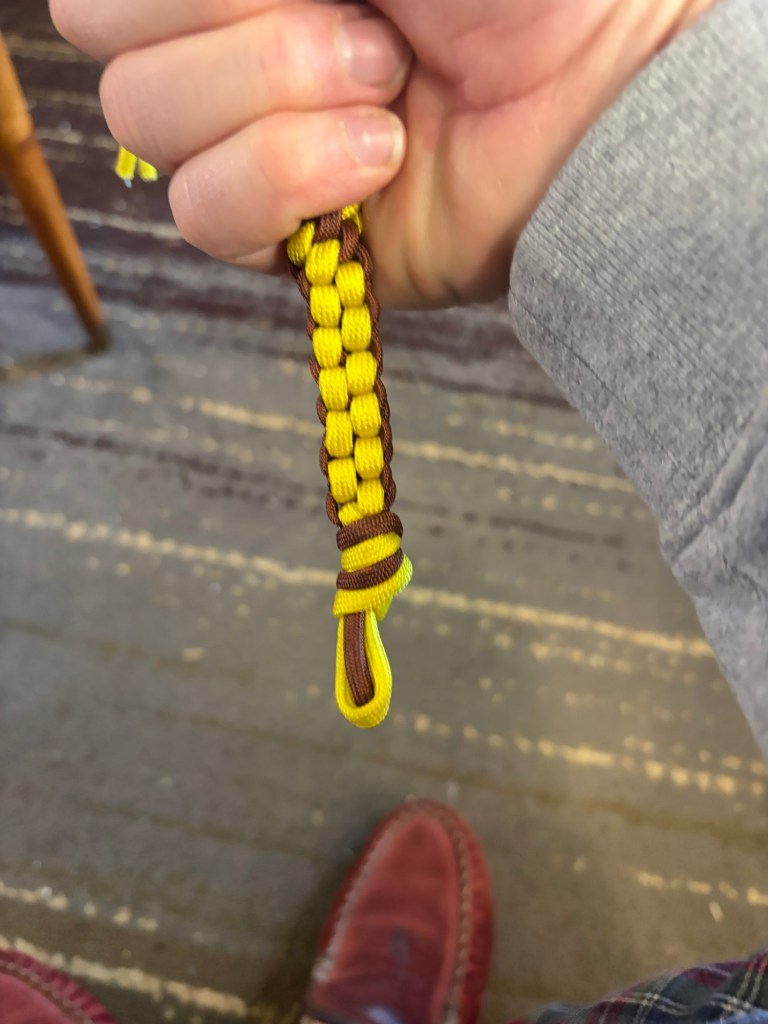
Or more messing about with Paracord.
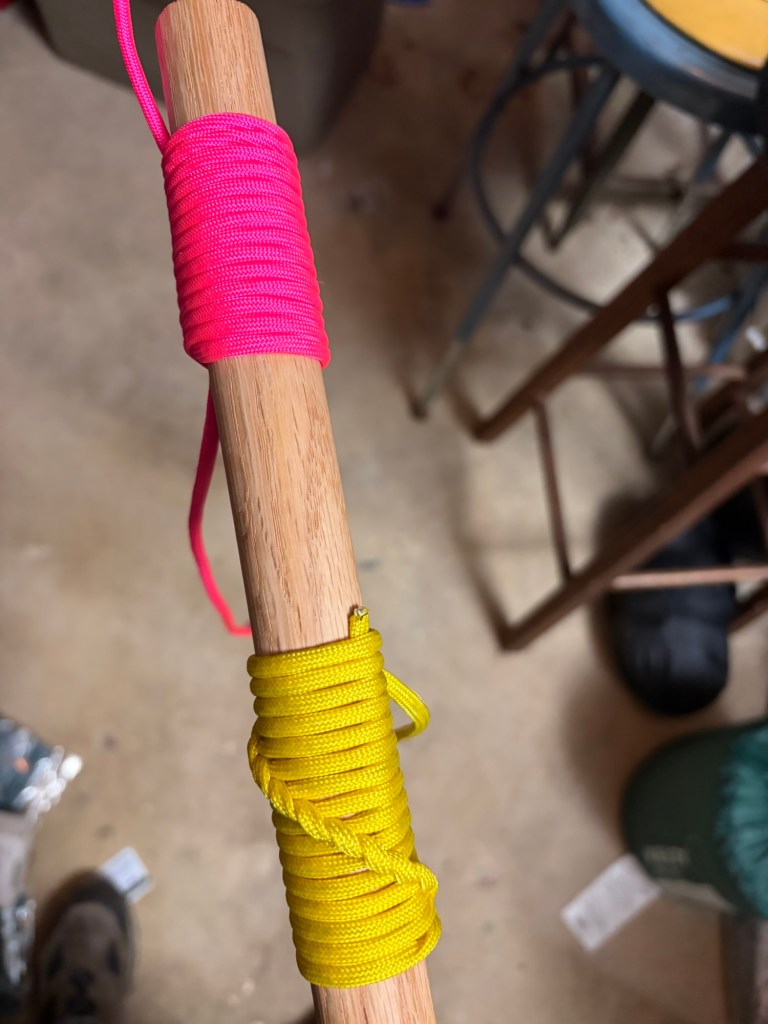
The pink is a common whipping (ABOK 3442).
The yellow is a French whipping (ABOK 3450).
Both of these are much better whipping knots than tool handles. With the common whipping, the wrap isn’t round because the cords under the wrap make it oblong.
The half hitches in the French whipping make it uncomfortable to hold, in my opinion. If the whipping was tied on a line, the half hitches would lay better in the hollows between the yarns. Some folks like that ridge, but it never seems to fit my hand. It does look nice though.
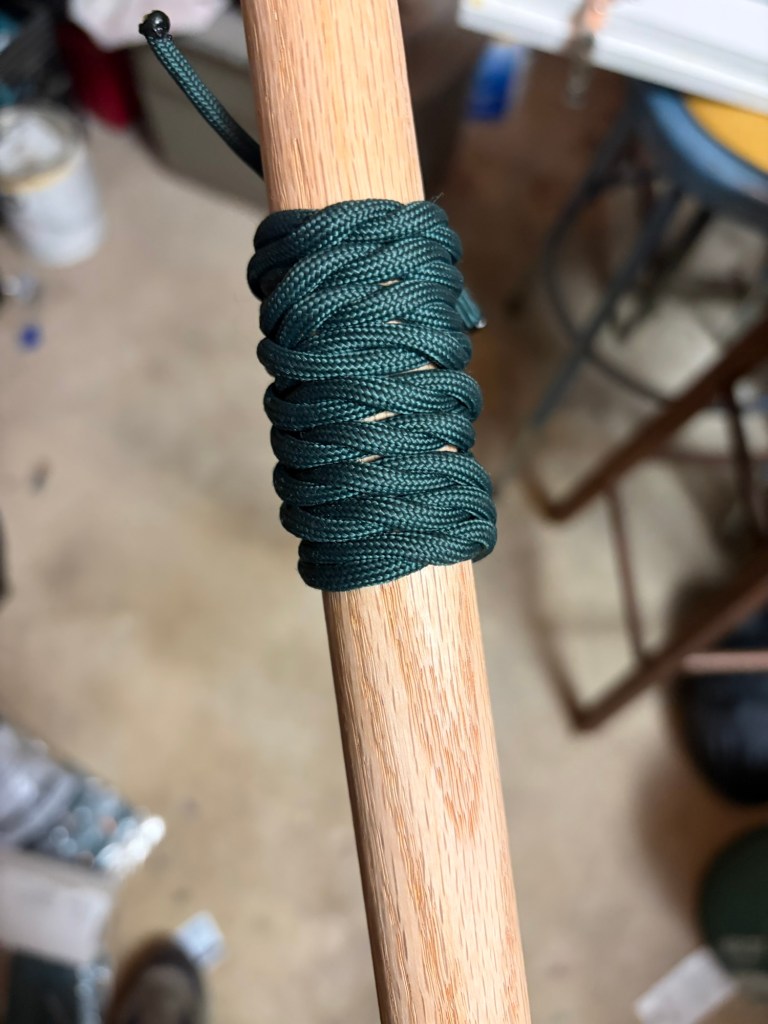
The West County Whipping (ABOK 3548) makes a nicer handle (again, in my opinion) because it is symmetrical. The half knots on each side mean it isn’t round, but it is symmetrical.
Now here’s where I went a bit off the rails. Since the West County Whipping ends with a square knot, why not begin with a square knot and add some visual interest?
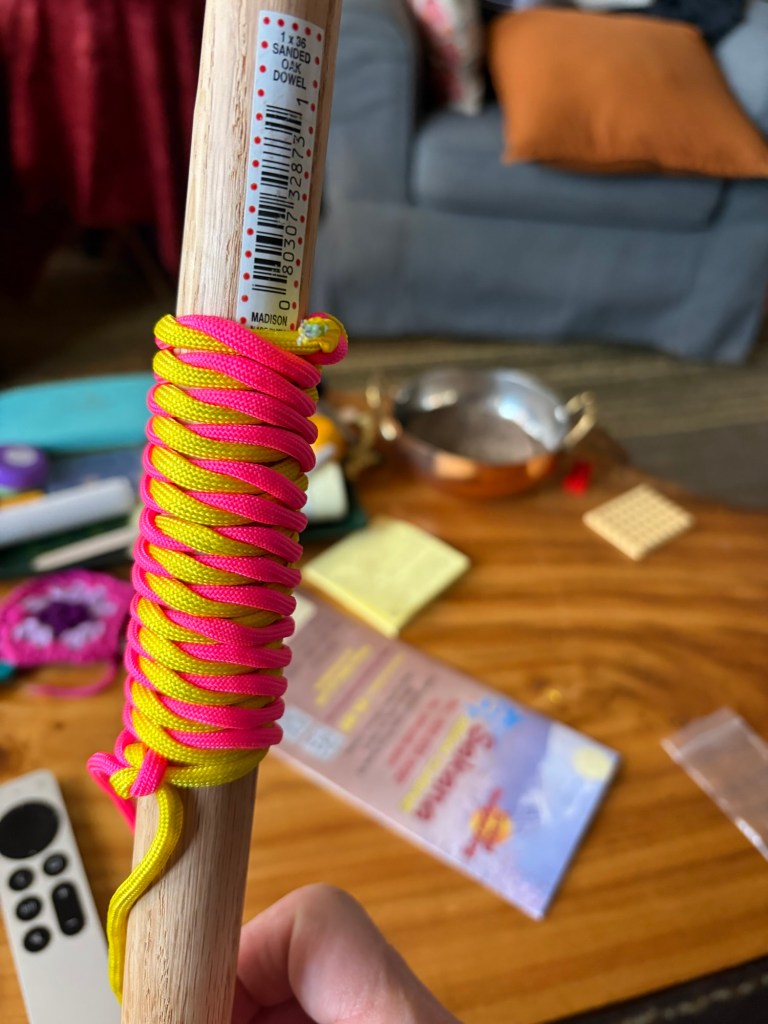
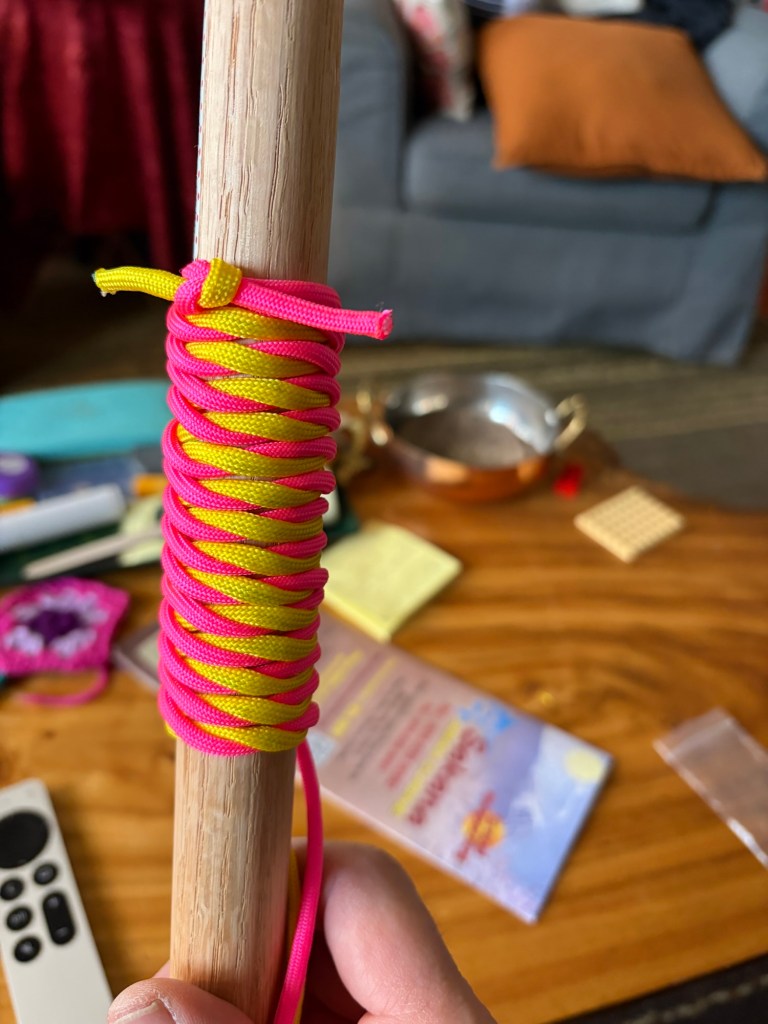
The West County Whipping is just a half a square knot on each side (left over right, flip 180 degrees, repeat)), so even if you struggle with the square knot, you should be able to handle this one.
Transform the classic paracord cobra stitch into a vibrant accessory with creative color combinations and unique knotting variations.
All the cool paracord kids call it the cobra stitch. Ashley calls it the Solomon Bar (ABOK 2496). In any case, it’s simple & fast to tie and makes a great sized lanyard or bracelet.
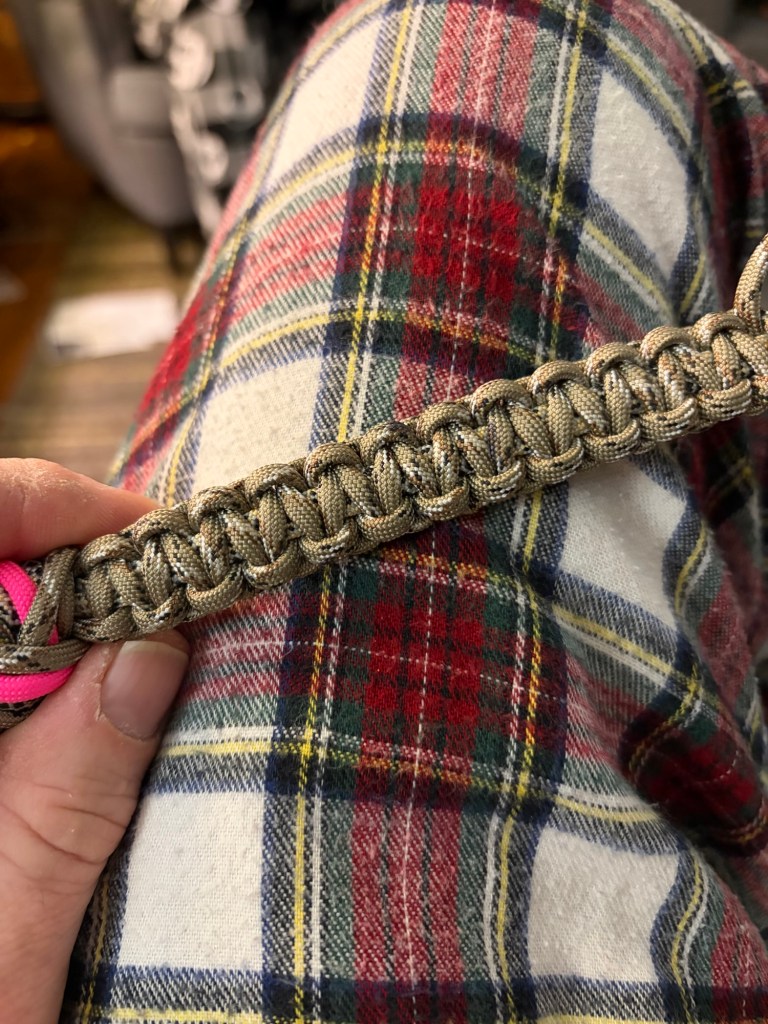
But it’s boring AF. So I had to see about making it fancy.
Continue reading “Embellishing the cobra stitch/ Solomon’s bar.”Sorry, this one happened too quickly for pictures. Seriously, once I started tying it just flew between my fingers.
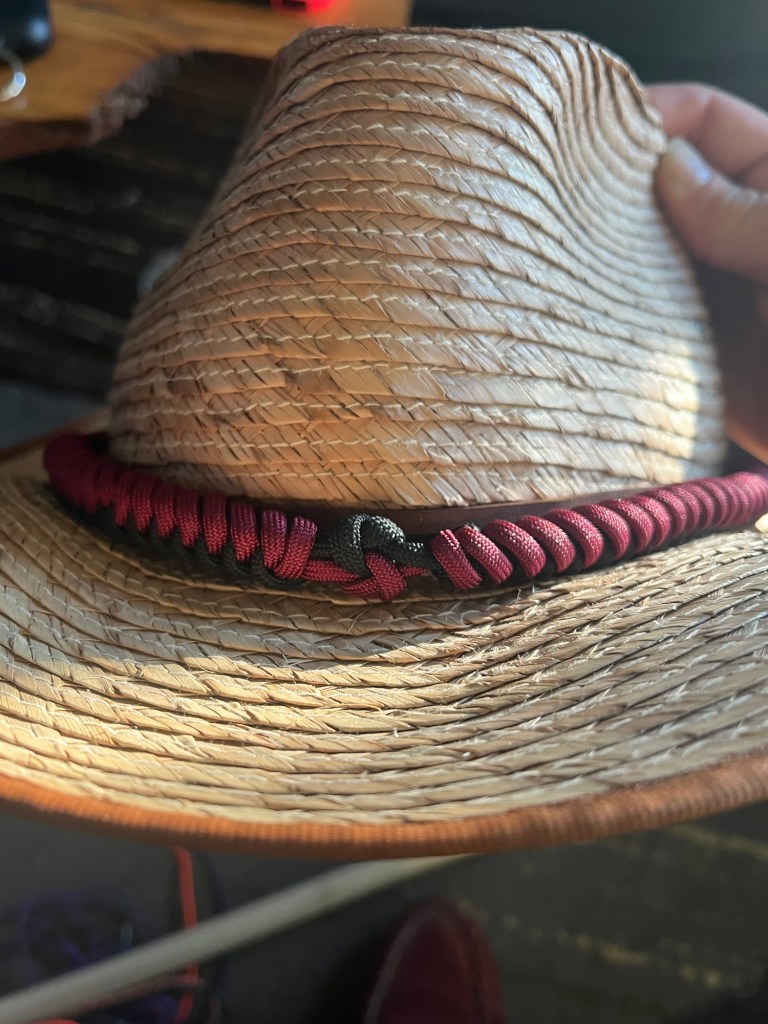
I’ve been playing with rope/cord/line for my entire life. Sometimes more successfully than others. After making the lanyard for my wife’s cane, I decided that my hat needed some color as well.
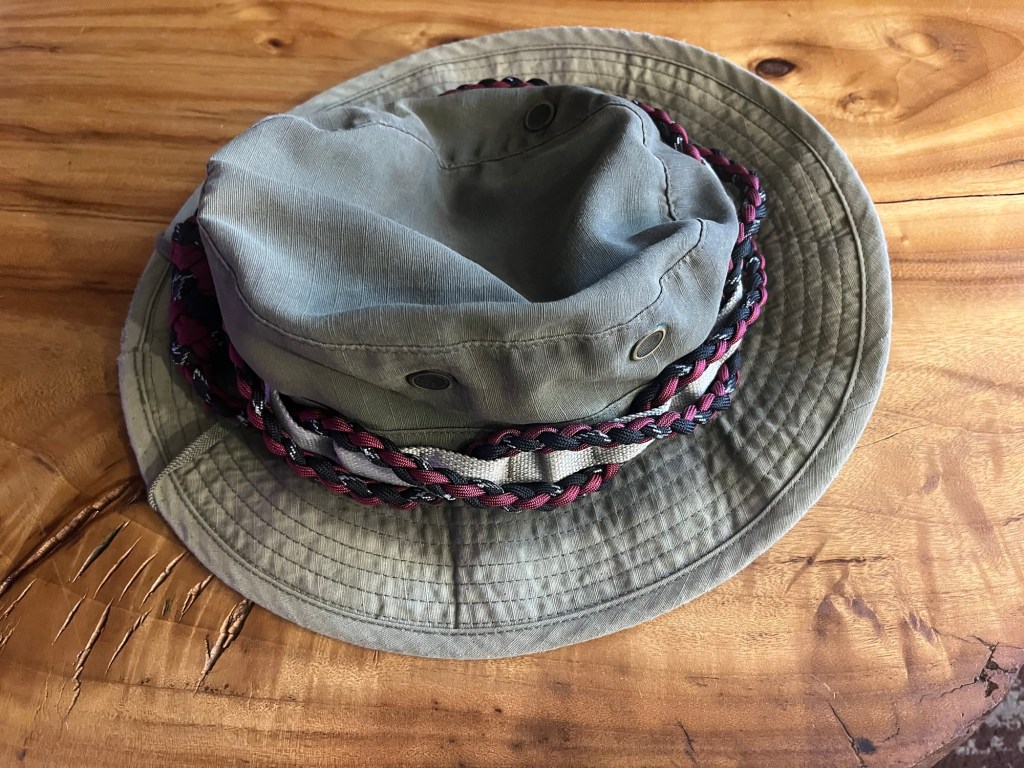
So I started playing with paracord and wanted to do some experiments with color.
This is an eight* strand herringbone braid in two colors. I find it interesting how changing the order of the colors changes the overall appearance of the project.
So far, the eight strand herringbone braid is my favorite braid. The biggest reason is that when it’s evenly tensioned, the finished braid is square in cross section. It’s quite striking visually and feels very interesting.
Continue reading “8 Strand Herringbone Braid Variations.”My nice hat is in need of some color, so I decided to test out some decorative knots.
Continue reading “More experiments”The dear Wife had surgery on her ankle this spring and is still on the mend. She recently graduated from crutches to cane and tasked me to rig up a lanyard for it.
Continue reading “Cane Lanyard”As I’ve been working on my Norse kit over the years and trying to flesh out the details, I’ve learned about Nålbinding.
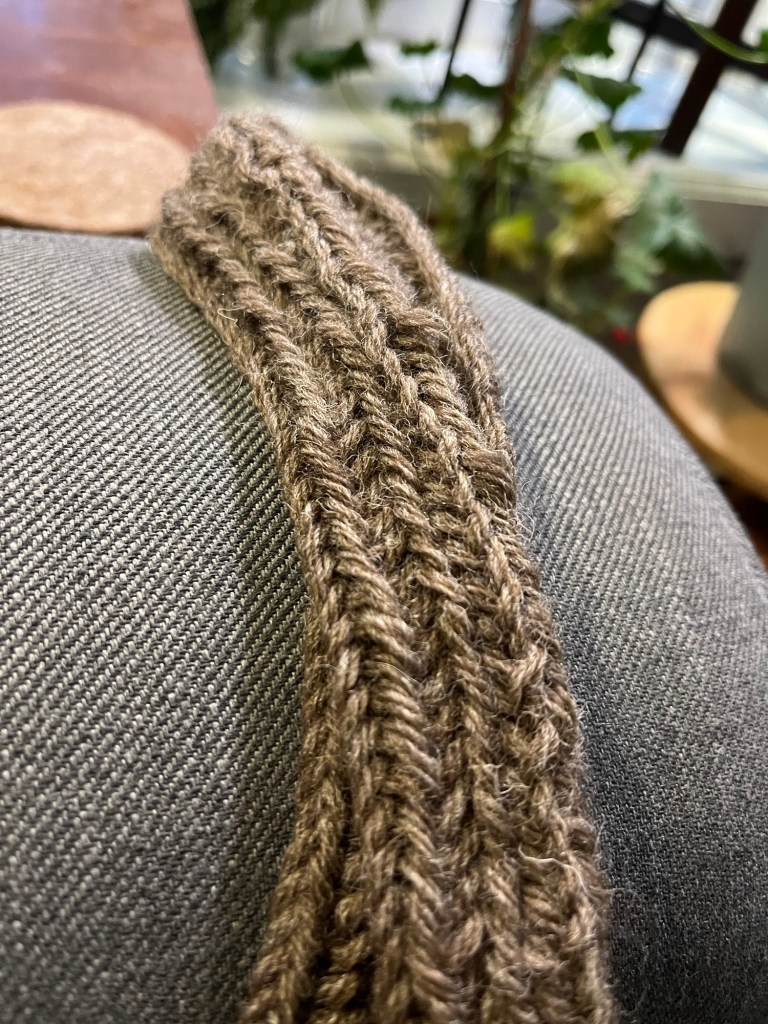
Nålbinding is a way to make stretchable fabric that predates knitting or crochet. The Norse used Nålbinding to make hats, mittens, and socks.
Continue reading “Another hobby (as if I didn’t have enough already)”