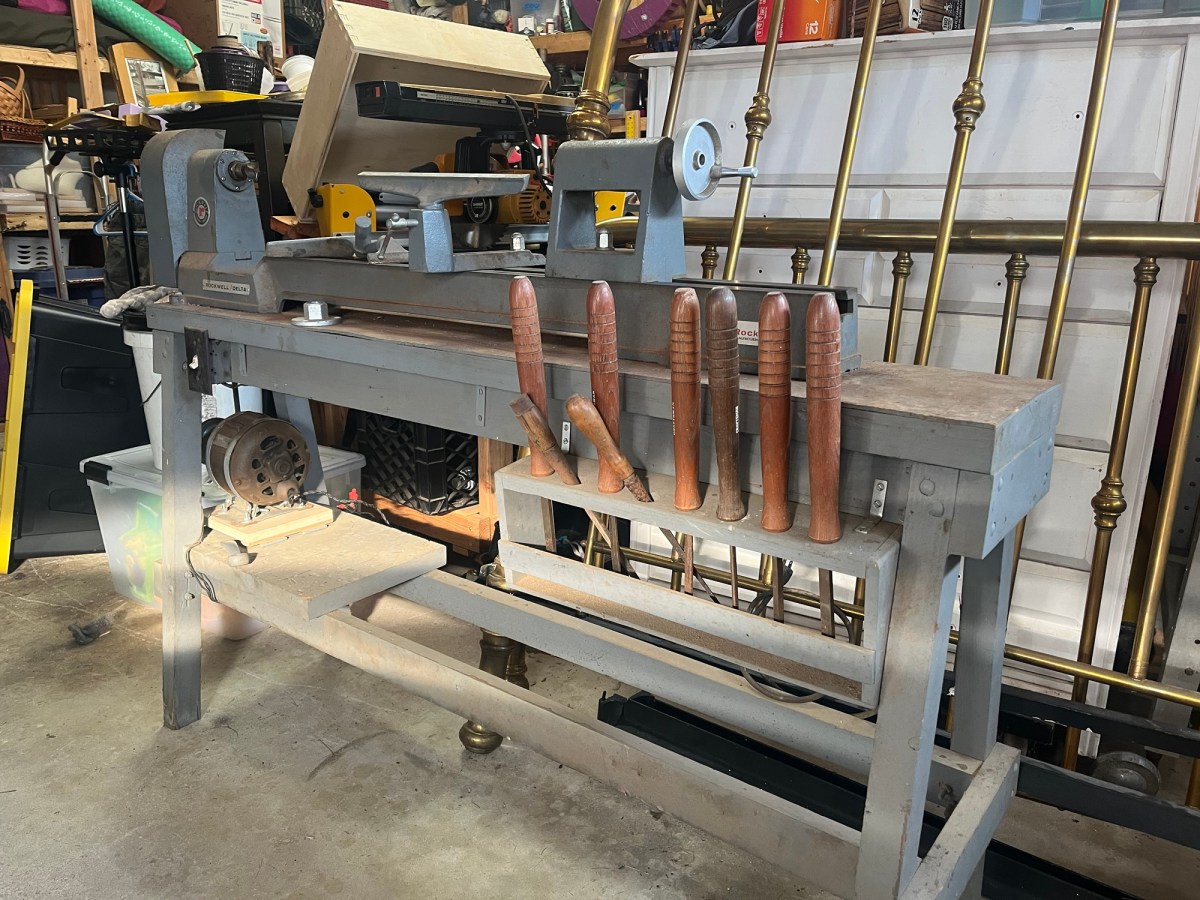
Last year a buddy asked me if I wanted his Grandad’s lathe. Without missing a beat, I said when can I pick it up?
When I got to his place the next weekend, I knew this was going to be another project.
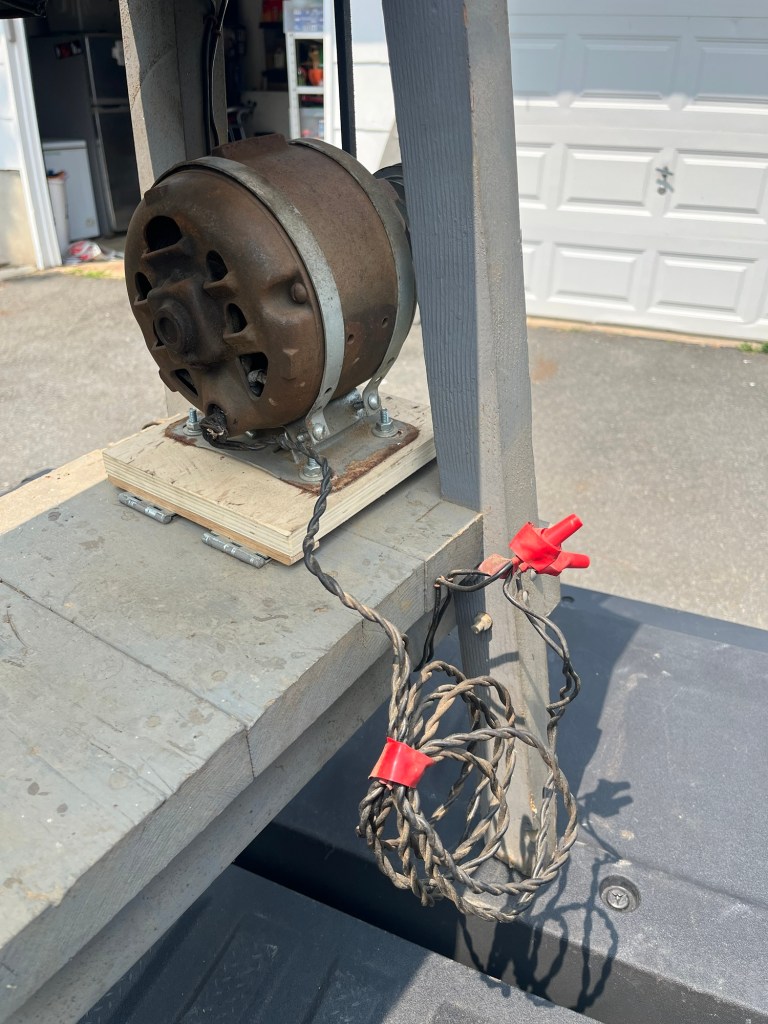
The wiring was quite crusty, and it was pretty questionable even when it was new.
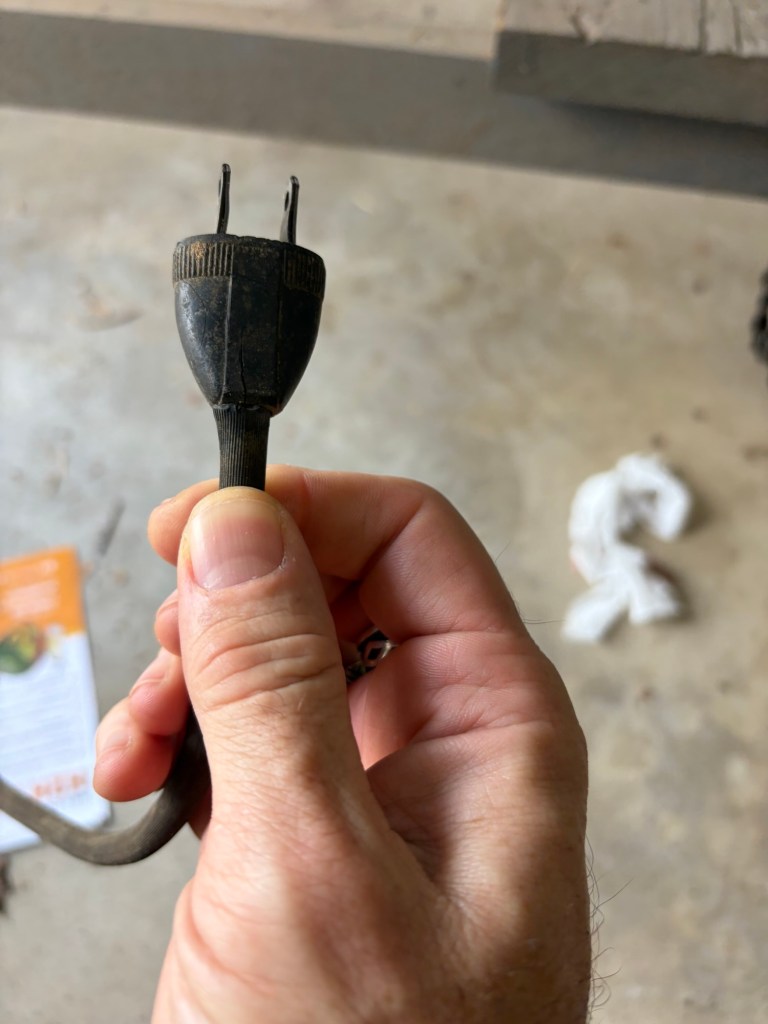
One of the best things about 21st century living is the internet- a quick google search of the model number (46-111) brought me a PDF of the owners manual.
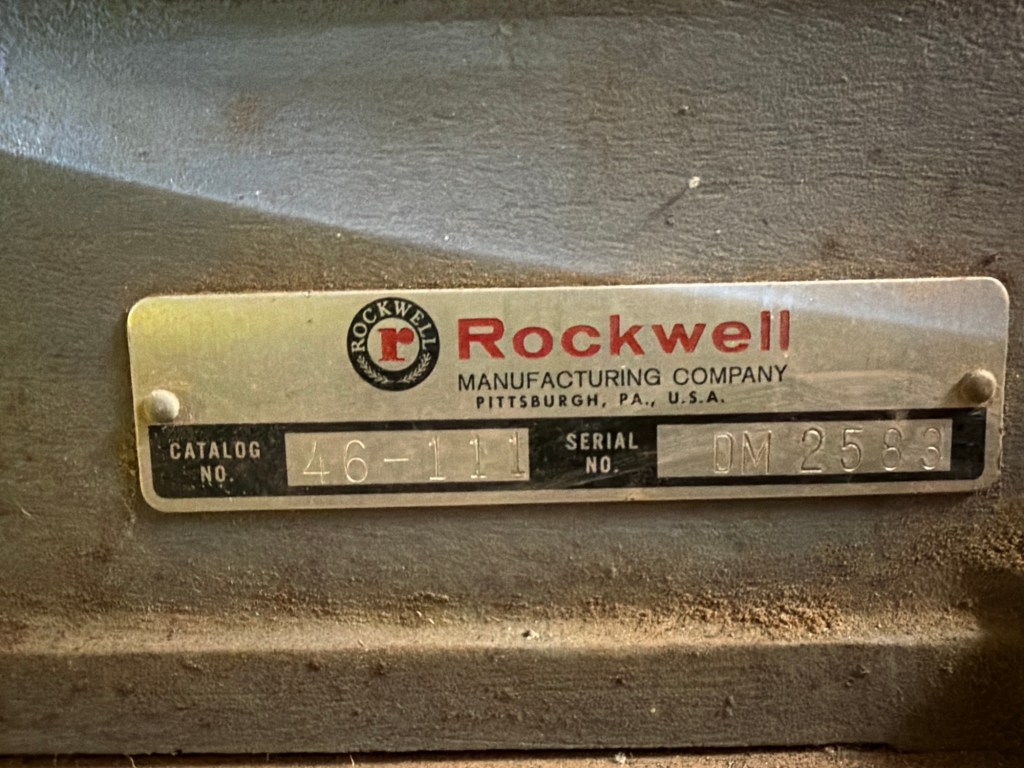
According to the manual, Delta recommends a 1/3 hp motor and my lathe only had a quarter horse.
So a complete electrical overhaul was in order from plug to motor.
Step one – strip off the old electrics.
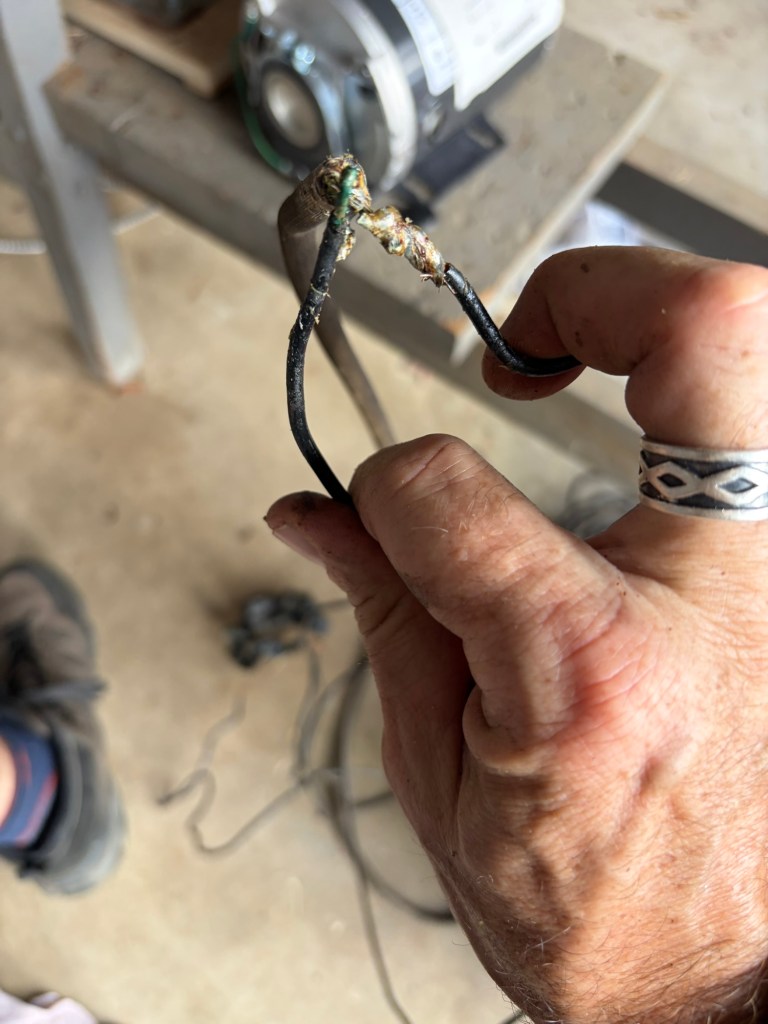
The stranded power cord was soldered onto the solid conductor wires and then protected with electrical tape. Of course in the decades since this was assembled, the adhesive failed & only the memory of having at one time being sticky was holding the tape in place.
My buddy’s granddad also thought that black insulation was for both hot & neutral wires. Given the complexity of the wiring that’s not really a big deal I suppose.
I think the best bit was the floating wire nuts near the motor. I feel like they were added later as the plastic felt newer and the red electrical tape still had adhesive. All that being said, the wire nuts were pushed on rather than being twisted on. The wires themselves weren’t in good contact at all. I was taught to twist the nuts until the wire below them makes two full turns. This both ensures that the conductors have sufficient contact & the twisted wire below locks them together.
Given the non-polarized plug and the fact that the switch only cuts one leg of the wiring, it’s conceivable that the wire nuts were energized when the switch was off. If one of these wire nuts had come loose when the switch was on the neutral side things could have gone badly.
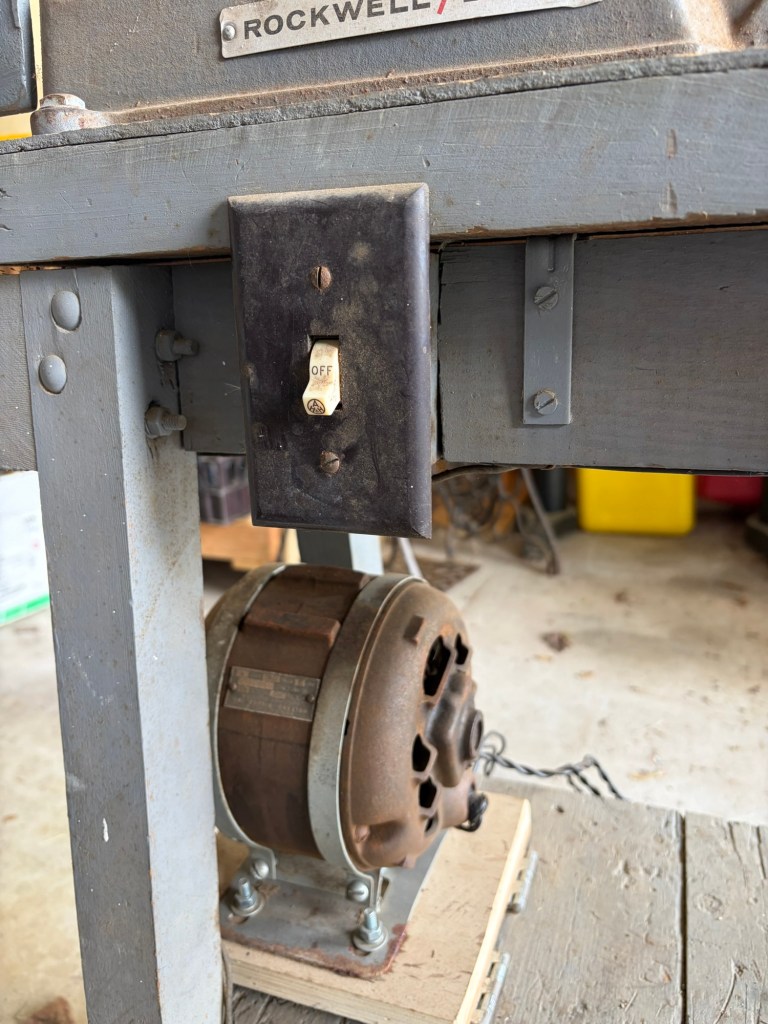
The switch itself was fairly straightforward. I really like the printing on the toggle itself.
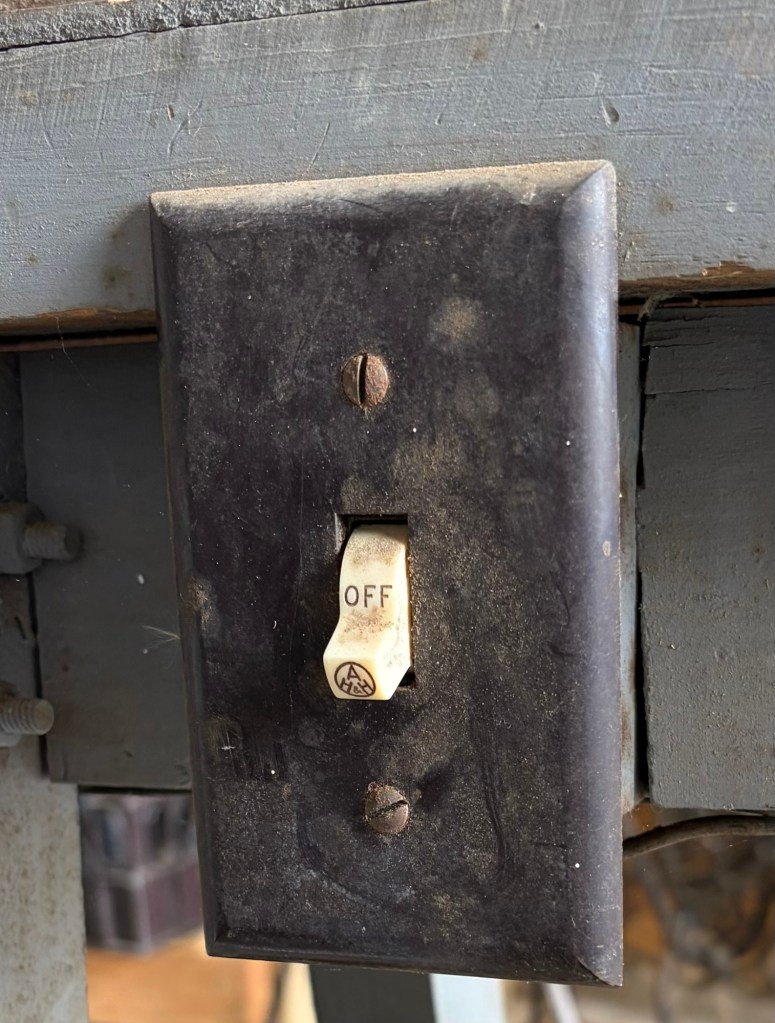
I may actually keep this switch to use somewhere else.
This switch, like most switches only broke one side of the circuit. Normally one breaks the hot side. (Dryer door switches being a notable exception.) But if the non-polarized plug had been flipped (50/50 odds), the lathe would be energized from the wall, through the motor to the switch.
Current status- a cast iron frame lagged onto a wooden table.
Tomorrow we start to re-power the lathe.


